CNEA advances artificial intelligence to enhance nuclear industry in Argentina
- August 6, 2024
- 0
The National Atomic Energy Commission develops artificial intelligence systems to automate key tasks, from quality control to radiotherapy in Argentina.

The National Atomic Energy Commission develops artificial intelligence systems to automate key tasks, from quality control to radiotherapy in Argentina.
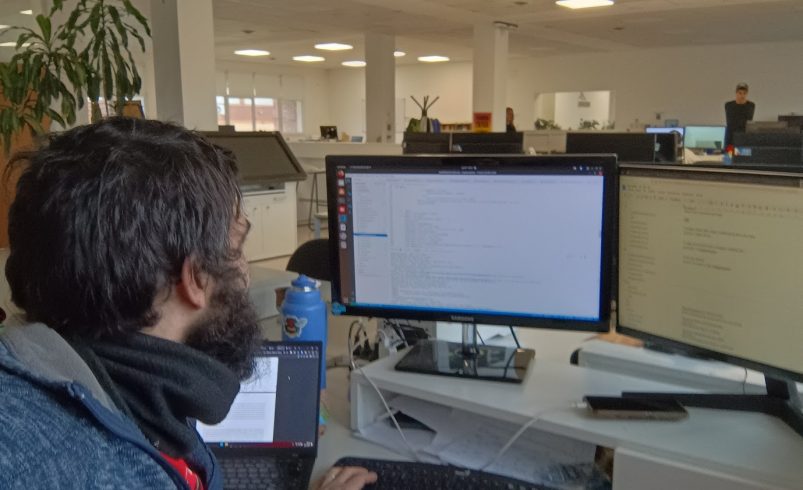
The Emerging Technologies Department of the Information and Communications Technology Management (GTIC) at the National Atomic Energy Commission (CNEA) is developing artificial intelligence and blockchain systems to address critical needs in the nuclear sector in Argentina.
These systems cover tasks ranging from nuclear fuel quality control to analyzing images for a specialized type of cancer radiotherapy.
Currently, tasks such as tracking radioactive materials or inspecting fuel quality are performed manually by researchers, operators, and technicians. The department aims to automate these processes safely, increasing efficiency and minimizing human error.
The Emerging Technologies team also applies blockchain for tracking and counting nuclear material, ensuring traceability, decentralization, and information security. Each block of data is immutable, allowing the monitoring of materials and recording the chain of responsibility. This system is being adapted for nuclear waste management, attracting interest both within and outside Argentina.
Regarding artificial intelligence, machine learning systems are being developed to learn from data and mimic human decision-making. For example, neural networks are trained to analyze images obtained through neutron autoradiography, used in Boron Neutron Capture Therapy (BNCT) to target cancer cells locally. This allows more precise and faster adjustment of radiation doses and treatment parameters than traditional methods.
Similarly, artificial intelligence is applied in characterizing materials for pressure tubes at the Embalse nuclear plant, key components of CANDU reactors operating under high pressure and extreme temperatures for 30 years.
The technology generates sharper, more analyzable images, accelerating quality control and material acceptance.
Another example is the inspection of uranium pellets, where AI automation detects irregularities and reduces risks, optimizing critical processes. Additionally, machine learning systems were implemented to detect and classify cyberattacks within CNEA’s network, enhancing the institution’s IT security.

These advances position CNEA as a pioneer in the application of artificial intelligence in the nuclear field. Furthermore, the department collaborates with the International Atomic Energy Agency (IAEA) in the International Network on Innovation for nuclear plants, contributing to the drafting of guidelines for the safe use of artificial intelligence, to be presented in Vienna this year.
The team, composed of Luis Agustín Nieto, Silvina Dengra, Ana Lucía Marzocca, Juan Pablo Caldo, Tomás Murillo, and Nicolás Dazeo, represents a key advance for automation, safety, and efficiency in the nuclear industry in Argentina, showing how artificial intelligence can transform strategic sectors of the country.