Colossal Biosciences bets on biotechnology to bring back the mammoth by 2028
- October 15, 2024
- 0
Colossal Biosciences plans to clone mammoth calves using Asian elephant genes, marking a breakthrough in animal de-extinction through biotechnology.

Colossal Biosciences plans to clone mammoth calves using Asian elephant genes, marking a breakthrough in animal de-extinction through biotechnology.
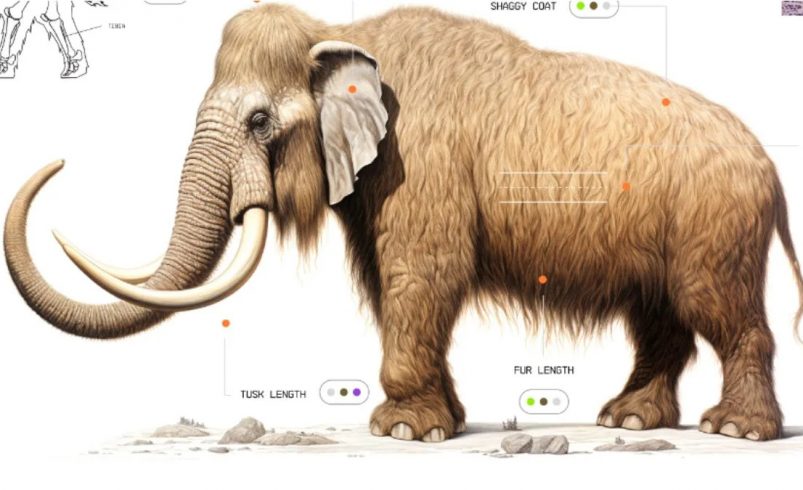
The U.S.-based company Colossal Biosciences announced plans to bring the woolly mammoth back by 2028, leveraging advances in biotechnology, synthetic biology, and cloning.
A groundbreaking “de-extinction” project aims to reconstruct the genome of Mammuthus primigenius and insert key genes into Asian elephants (Elephas maximus), the closest living relatives of these extinct giants.
Its first goal is to create a hybrid that combines elephant traits with distinctive mammoth features such as long hair, thick fat layers, dome-shaped heads, and curved tusks.
Scientists aim to produce calves capable of surviving in controlled habitats, laying the groundwork for potential future reintroductions into the wild.
Founded in 2021 by geneticist George Church and entrepreneur Ben Lamm, Colossal is not limited to the mammoth. The company also seeks to resurrect species like the Tasmanian tiger, dodo, and the aurochs, ancestor of the domestic cow.

Lamm asserts that “it is very likely another extinct species will come back to life before the mammoth,” emphasizing that the first calves could be born by 2028.
To achieve this, Colossal acquired over 60 partial DNA samples of mammoth, which are analyzed and reconstructed using bioinformatics. The synthesized genes are then inserted into the genome of the Asian elephant, and cloning techniques are applied to create a hybrid embryo to be implanted into a surrogate mother.
Despite the progress, the project raises ethical and scientific debates. Experts question the feasibility of recreating extinct species, the genetic risks involved, and the broader implications of attempting similar processes in humans.
Paleontologist and evolutionary geneticist Love Dalén notes that the biggest challenge is that the mammoth genome is not fully understood, limiting the precision of the hybrid.
Nevertheless, Colossal Biosciences represents a remarkable example of how biotechnology could reshape species conservation and genetic research, opening the door to a future where extinction may no longer be irreversible.