Microrobots from Singapore pave the way for breakthroughs in precision medicine and biomedical technology
October 29, 2024
0
Researchers in Singapore developed magnetic microrobots set to revolutionize medical technology with safer and more precise therapies.
A research team from Nanyang Technological University (NTU) in Singapore has achieved a pioneering breakthrough by developing magnetic microrobots designed for precision therapies and advanced medical interventions.
Built with biocompatible materials, these highly maneuverable devices have the potential to transform how drugs are delivered and how delicate surgeries are performed inside the human body.
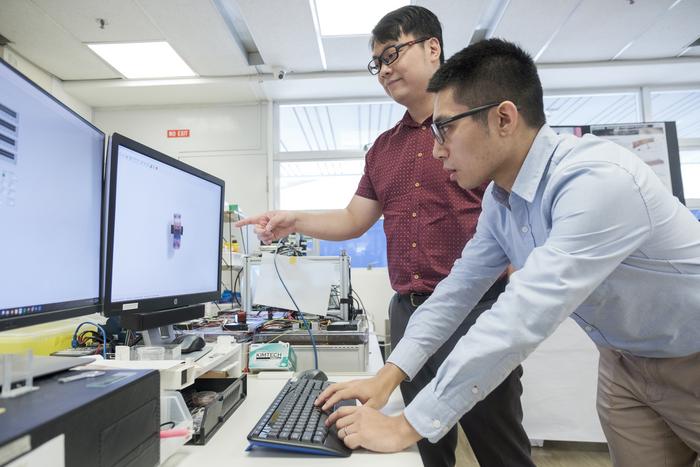
Led by Assistant Professor Lum Guo Zhan, the researchers embedded magnetic microparticles into non-toxic polymers, creating robots that are both flexible and safe for human use.
When exposed to external magnetic fields, the microrobots can be “programmed” to perform specific functions, such as releasing drugs in targeted areas or executing highly precise surgical maneuvers.
Mobility is a core innovation. The NTU microrobots operate with six degrees of freedom (DoF), including translations along three axes and rotations along three others. In controlled tests, they rotated up to 43 times faster than existing miniaturized robots in a key degree of motion, offering a critical advantage for time-sensitive medical interventions.
Their design also leverages soft, flexible materials that mimic biological movements. One prototype swims like a jellyfish, while another functions like a claw, grasping and moving microscopic objects with remarkable accuracy. This versatility makes them powerful tools for reaching confined areas of the human body that remain inaccessible to traditional methods.
In drug delivery, the team reported a major advancement in Advanced Materials. Unlike earlier models, the new microrobots can carry up to four different drugs and release them in programmable doses and sequences.
How does one work in the lab?
Laboratory tests showed the robots moving at speeds between 0.3 mm and 16.5 mm per second, accurately reaching separate zones and releasing drugs over an eight-hour period with minimal leakage.
The clinical implications are significant. According to Dr. Yeo Leong Litt Leonard, surgeon at the National University Hospital and Ng Teng Fong General Hospital, this technology could eventually replace traditional invasive tools, such as catheters, by providing safer, less invasive, and more efficient treatment options.
Dr. Yeo Leong Litt Leonard, surgeon at the National University Hospital
The NTU team now plans to further miniaturize the robots, aiming to deploy them in treatments for brain tumors as well as bladder and colon cancers. Before reaching human trials, the microrobots will undergo extensive testing in organ simulation devices and animal models to ensure both safety and effectiveness.
This innovation not only strengthens Singapore’s position as a global hub for biomedical technology but also demonstrates how the convergence of engineering, biomedicine, and materials science is reshaping the future of healthcare.