When science meets technology: Artificial Intelligence wins the 2024 Nobel Prize
- October 15, 2024
- 0
Artificial Intelligence took center stage at the 2024 Nobel Prize, honored in physics and chemistry for reshaping scientific and applied knowledge.

Artificial Intelligence took center stage at the 2024 Nobel Prize, honored in physics and chemistry for reshaping scientific and applied knowledge.
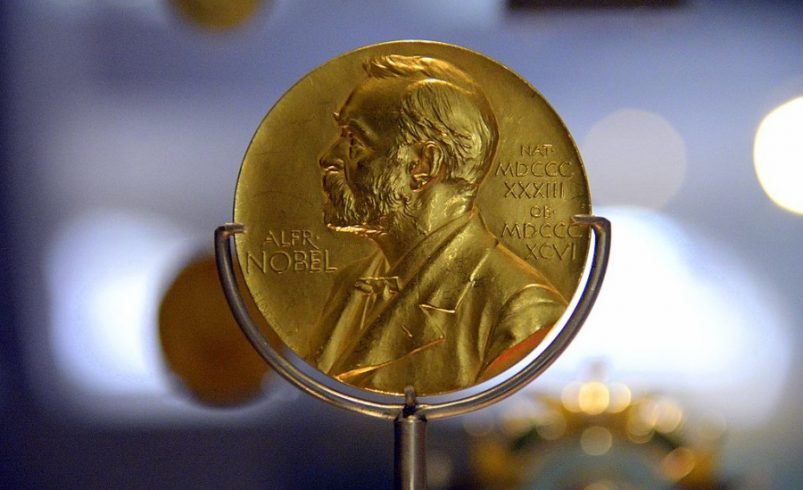
The year 2024 will be remembered as a turning point in the history of science and innovation. For the first time, the Nobel Prize in multiple disciplines explicitly recognized the transformative power of Artificial Intelligence, cementing its role as a key tool to understand, model, and expand the boundaries of human knowledge.
Awards in both physics and chemistry highlight the importance of multidisciplinary collaboration between basic science, computing, and biology.
The Nobel Prize in Physics was awarded to John Hopfield and Geoffrey Hinton, pioneers who shaped the field of artificial neural networks. In 1982, Hopfield introduced a model linking neuroscience to the physics of atomic spins.
His proposal simulated how the human brain stores and retrieves memories — a process known as associative memory. This breakthrough not only connected physics with neuroscience but also laid the foundations for the development of Artificial Intelligence.
BREAKING NEWS
— The Nobel Prize (@NobelPrize) October 8, 2024
The Royal Swedish Academy of Sciences has decided to award the 2024 #NobelPrize in Physics to John J. Hopfield and Geoffrey E. Hinton “for foundational discoveries and inventions that enable machine learning with artificial neural networks.” pic.twitter.com/94LT8opG79
Geoffrey Hinton, often called one of the “fathers” of deep learning, expanded Hopfield’s ideas using statistical physics principles. He developed neural networks that could learn complex patterns and generate novel solutions, from image recognition to synthetic data generation. These innovations paved the way for tools like today’s language models and AlphaFold, the revolutionary system for predicting molecular structures.
Their research transcended disciplinary boundaries. Particle physics, materials science, and neuroscience have all benefited from methods born in Artificial Intelligence. As Hinton remarked upon receiving the award: “these advances will have an impact comparable to the industrial revolution; but instead of replacing physical labor, they will amplify our intellectual abilities.”
The Nobel Prize in Chemistry honored Demis Hassabis, John Jumper, and David Baker for revolutionizing structural biology through molecular prediction tools. The DeepMind team was recognized for AlphaFold, a system that solved a long-standing scientific challenge: predicting a protein’s 3D shape from its amino acid sequence.
BREAKING NEWS
— The Nobel Prize (@NobelPrize) October 9, 2024
The Royal Swedish Academy of Sciences has decided to award the 2024 #NobelPrize in Chemistry with one half to David Baker “for computational protein design” and the other half jointly to Demis Hassabis and John M. Jumper “for protein structure prediction.” pic.twitter.com/gYrdFFcD4T
AlphaFold has achieved unprecedented accuracy, enabling breakthroughs in drug design, disease research, and synthetic protein engineering. David Baker was also recognized for his contributions with RoseTTAFold and earlier algorithms that allowed scientists to create proteins never before seen in nature.
These achievements show how Artificial Intelligence accelerates discoveries and reshapes science in fields where traditional experimentation faced technical and time barriers.
The simultaneous recognition in physics and chemistry sends a clear message: the future of science relies on integration across disciplines. Artificial Intelligence is no longer a separate field but a transversal catalyst for innovation, from studying the brain to designing new molecules.
Nobel Prize 2024 highlights how the line between theoretical and applied research can blur when the shared goal is pushing human knowledge further. Hopfield, Hinton, Hassabis, Jumper, and Baker were not only awarded for their individual contributions but also for paving collaborative paths that inspire future generations of scientists.