Keclon: How an Argentine company leads the global biotechnology sector
- November 14, 2024
- 0
Keclon’s success shows how Argentina leverages biotechnology to solve industrial challenges and compete globally with innovative solutions.

Keclon’s success shows how Argentina leverages biotechnology to solve industrial challenges and compete globally with innovative solutions.
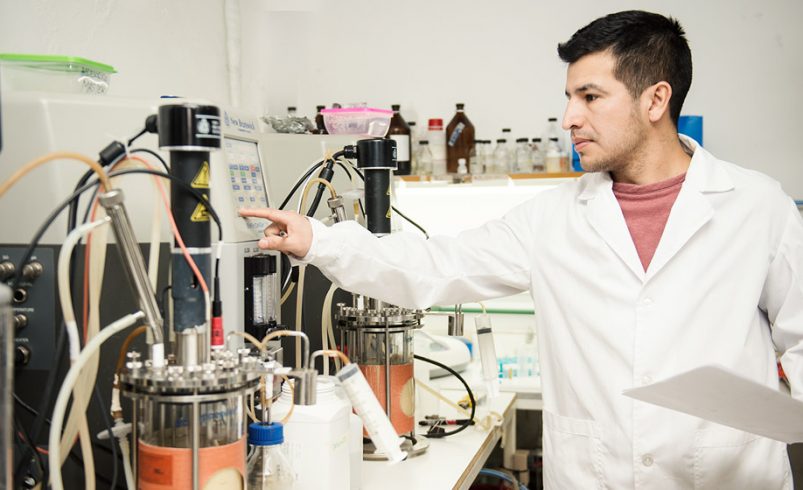
In a small laboratory at the Institute of Biotechnological and Chemical Processes (IPROBYQ) in Rosario, a group of CONICET scientists tackled a challenge that would reshape the relationship between science and industry in Argentina. What is Keclon?
In 2012, the country led global biodiesel exports but faced a critical issue: sediment in the fuel. Guided by Hugo Menzella, a biochemist with international experience in synthetic biology, the team proposed an innovative solution: using enzymes to purify biodiesel.
This led to the creation of Keclon, a Technology-Based Company (EBT) that solved the problem in less than two years, laying the groundwork for a revolution in applied biotechnology.
Enzymes are microscopic molecules that catalyze chemical reactions in all living organisms and can optimize industrial processes, reducing costs and waste. Keclon developed a synthetic enzyme capable of removing biodiesel sediment, positioning Argentina at the forefront of technological innovation.
Market changes forced Keclon to pivot. Molinos Agro, a major global soybean processor, presented a new challenge: reducing crude oil refining costs.
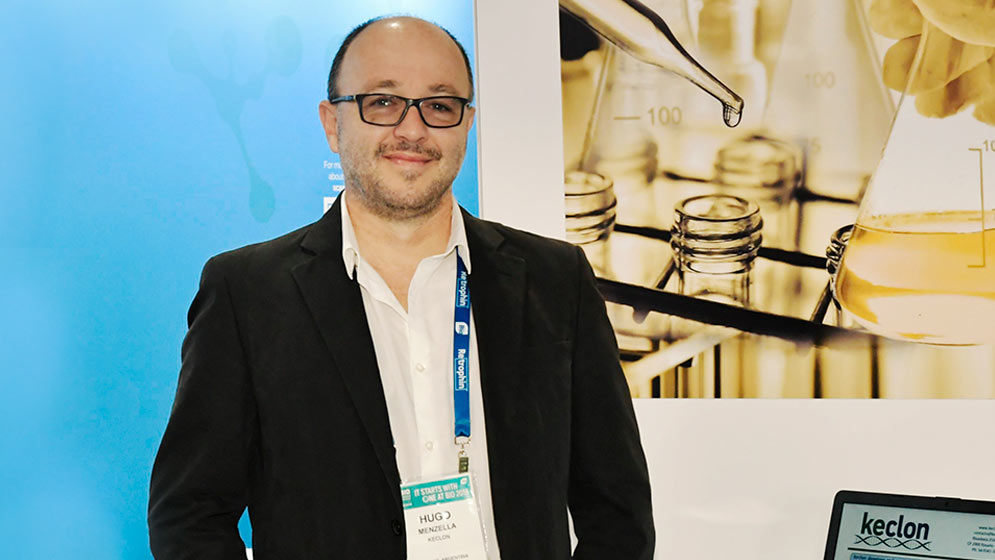
“When processing seeds, the crude oil contains impurities that must be removed, generating waste and reducing productivity,” explains Menzella. Keclon’s enzymes increased productivity by 2.5%, equivalent to 250,000 additional tons of soybean oil per year, boosting the country’s revenue by hundreds of millions of dollars and reducing environmental impact.
Keclon expanded beyond the domestic market, exporting enzymes to Europe, Brazil, and soon the United States. In 2021, it opened an automated plant in San Lorenzo, Santa Fe, capable of producing tons of enzymes used in the food, cosmetics, biomedical, and biofuel industries.
Francisco Colombatti, head of Innovation at Molinos Agro, highlights: “Keclon provides solutions comparable to European or Japanese companies but at much more competitive costs. It’s a source of pride that an Argentine company competes at the highest level.”
Today, Keclon employs eighty people, many trained at CONICET, demonstrating that technology transfer bridges academic research and industry needs.
The story of Keclon shows that resilience and adaptability are crucial: failures are stepping stones to success, allowing Argentine biotechnology to turn industrial problems into economic and environmental opportunities.