Scientists Use Artificial Intelligence and Biotechnology to Revive the “Game of Thrones” Giant Wolf
April 8, 2025
0
Researchers employ artificial intelligence and biotechnology to recreate wolves carrying ancestral genes from a species extinct 13,000 years ago.
For over a decade, reviving extinct species, known as “de-extinction,” has fascinated scientists and technologists.
Colossal Bioscienceshas now taken a historic step by creating wolves carrying genes from the giant dire wolves, popularized by Game of Thrones, which went extinct 13,000 years ago.
In 2021, independent researchers recovered DNA from dire wolf fossils. Using this material, Colossal scientists edited 20 genes in gray wolves to introduce traits of their ancestral cousins. The modified embryos were implanted in surrogate mothers, producing three healthy pups: Romulus, Remus, and Khaleesi.
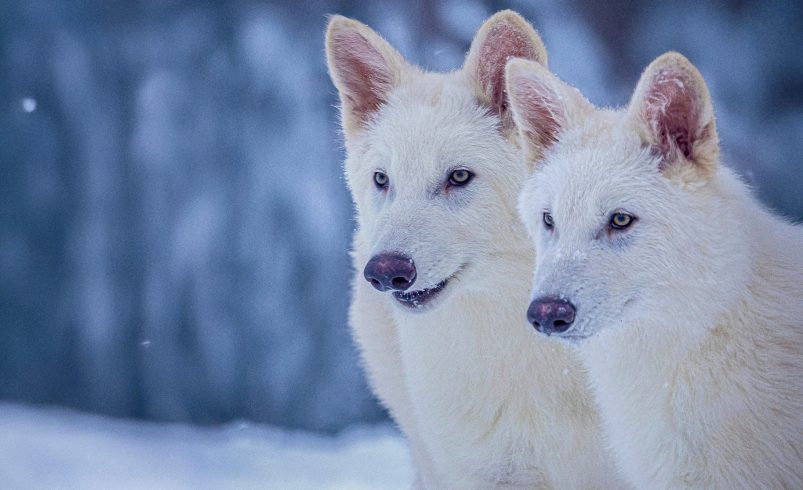
These wolves are notable for their size, dense pale coats, bushy tails, and mane-like fur around the neck—traits absent in gray wolves. Colossal’s Chief Science Officer, Beth Shapiro, called it the first successful case of functional de-extinction.
Colossal’s Chief Science Officer, Beth Shapiro,
Although the wolves will remain in captivity, the technology could aid endangered species like the red wolf, whose population is mainly in North Carolina.
Colossal’s approach analyzes ancient DNA to identify key mutations distinguishing extinct species from living relatives. After editing gray wolf DNA to create viable embryos, the resulting animals are not genetically identical to dire wolves but retain crucial traits.
Fossils from 13,000- and 72,000-year-old dire wolves allowed reconstruction of their genome. These wolves were part of the lineage that produced modern wolves, jackals, and African wild dogs but were 25% larger than gray wolves, with massive jaws and teeth, preying on horses, bison, and possibly mammoths.
De-extinction involved editing 20 genes in gray wolf cells cultured in the lab. Fifteen genes were modified directly, while five were altered using backup mutations to avoid deafness or blindness. The edited DNA was transferred into empty dog eggs, implanted in surrogate mothers, resulting in four pups.
The wolves areabout 20% larger than same-age gray wolves, with thick white coats, bushy tails, and prominent neck manes. Captive upbringing limits natural behavior, and their ancestral prey is extinct or in small populations.
Colossal’s projects
Artificial intelligence and biotechnology were crucial. AI analyzed vast ancient DNA datasets and modeled gene editing without compromising wolf health, predicting phenotypes and optimizing cloning and editing experiments.
While the revived wolves do not perfectly replicate the original species, they serve as living labs to study extinct biology. They also pave the way for genetic conservation strategies that may enhance threatened populations, such as red wolf-coyote hybrids in the U.S.
External experts, like Adam Boyko of Cornell University, find the project exciting but caution that the pups do not fully replicate ancestral behavior or diet. Nevertheless, combining biotechnologyand artificial intelligence represents a milestone in de-extinction and conservation research.
Colossal collaborates with Indigenous communities to respect cultural values and promote biodiversity education. Introducing animals with ancestral genes into natural habitats requires careful planning, as they compete with current species and must adapt to modern ecosystems.
These advances demonstrate that artificial intelligence and biotechnology can redefine conservation limits, opening paths to protect future biodiversity while balancing innovation, ethics, and sustainability.