Scientists discover unprecedented water behavior with potential applications in Argentina and nanotechnology
May 22, 2025
0
Researchers reveal a unique water phenomenon on nanoporous surfaces that could transform industrial and biotech processes in Argentina.
A team of scientists led by Dr. Martín Bellino from the Institute of Nanoscience and Nanotechnology (INN, CONICET-CNEA) has discovered a previously unknown behavior of water when interacting with nanoporous surfaces, opening new opportunities in nanotechnology and industrial applications in Argentina.
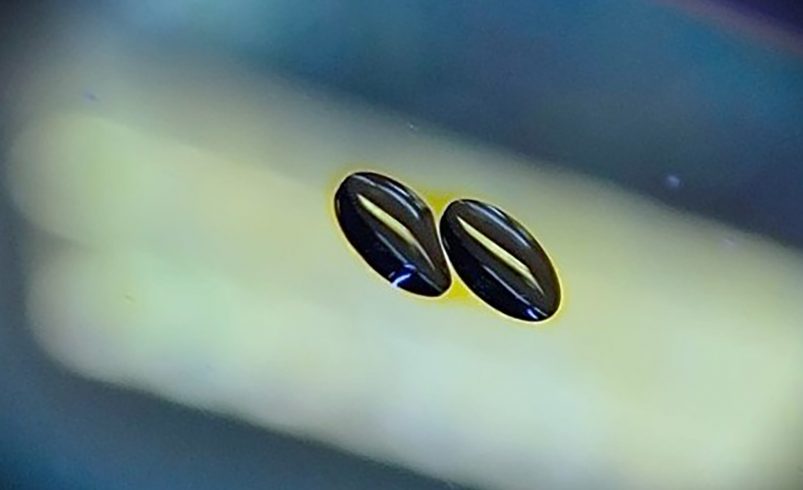
Published in “Nano Letters,” the study shows how water droplets deform and form self-sustaining compartments without the need for external chemicals, a phenomenon that could revolutionize processes in biotechnology, chemical engineering, and thermal management.
In many industrial processes, water handling is essential. Traditionally, achieving phase separation or keeping reactants isolated requires specific chemical agents.
This discovery enables spontaneous compartmentalization solely through physical interactions between water and nanostructured surfaces, improving efficiency and sustainability in industrial applications.
According to Bellino, “this unprecedented phenomenon breaks traditional limits in water compartmentalization. We achieve it through physical events induced by nanomaterials without added chemicals, opening new possibilities in biotechnology and industrial applications like thermal management and chemical process engineering.”
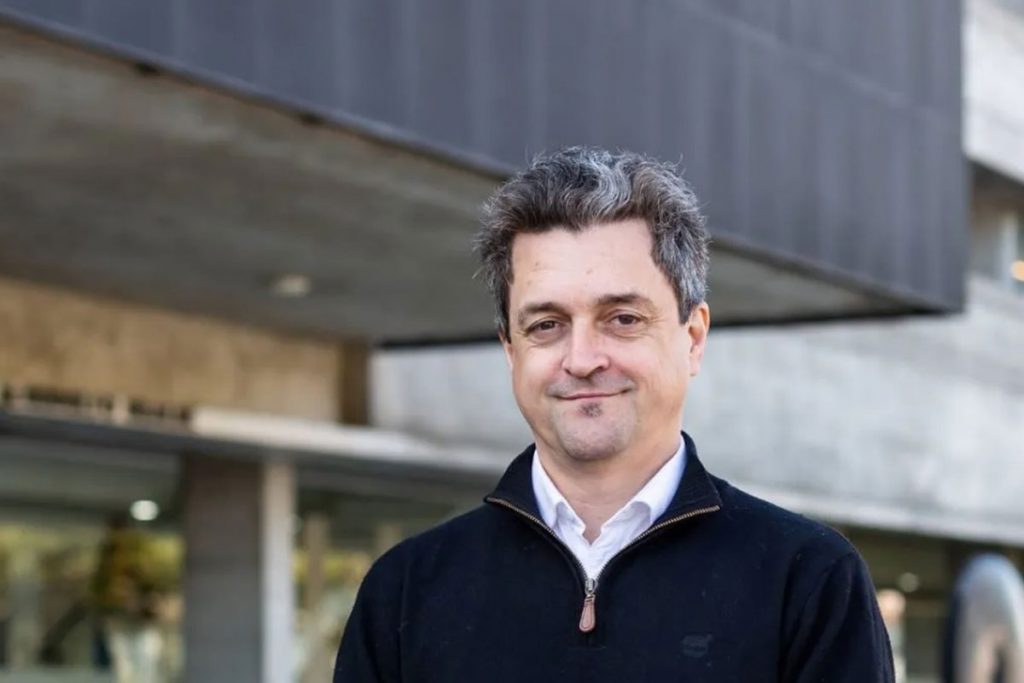
Dr. Galo Soler-Illia, director of the Institute of Nanosystems at UNSAM, added that this behavior could be used to control chemical reactions and phase transfers. “We can imagine two water reservoirs with different compositions in contact but not merging, allowing controlled substance exchange. This is highly useful in industries that need separate reactants to interact only at specific times.”
Dr. Galo Soler-Illia, director of the Institute of Nanosystems at UNSAM.
What are the program’s functions?
Applications of this discovery include:
Biotechnology and medicine: The ability to create interconnected droplet circuits can aid the development of rapid and portable diagnostic devices. In clinical labs, multiple independent aqueous compartments can contain different reagents without mixing until the reaction is activated, enhancing accuracy and reducing cross-contamination risks.
Fluidics and thermal management: Dividing and controlling water at the nanoscale can improve heat management in electronic components or cooling systems, optimizing the performance of industrial equipment and data centers.
Chemical processes and manufacturing: Controlled phase separation allows for specific reactions without additional chemical agents, reducing costs and complexity in industrial production.
This discovery marks a significant advance in nanotechnology, demonstrating how manipulating water at the nanoscale can change paradigms in research and industrial production. Experts highlight its potential to drive innovation in Argentina and globally, transforming how liquids are controlled and used across scientific and technological disciplines.
The findings not only expand fundamental knowledge of water behavior but also promise practical applications in biotechnology, chemical engineering, thermal management, and other fields, providing more sustainable and efficient tools for the industry of the future.