Riots and injuries in Serbia following massive opposition rally
- June 28, 2025
- 0
In Serbia, tens of thousands of protesters demanded early elections; police responded with tear gas, leaving several seriously injured.

In Serbia, tens of thousands of protesters demanded early elections; police responded with tear gas, leaving several seriously injured.
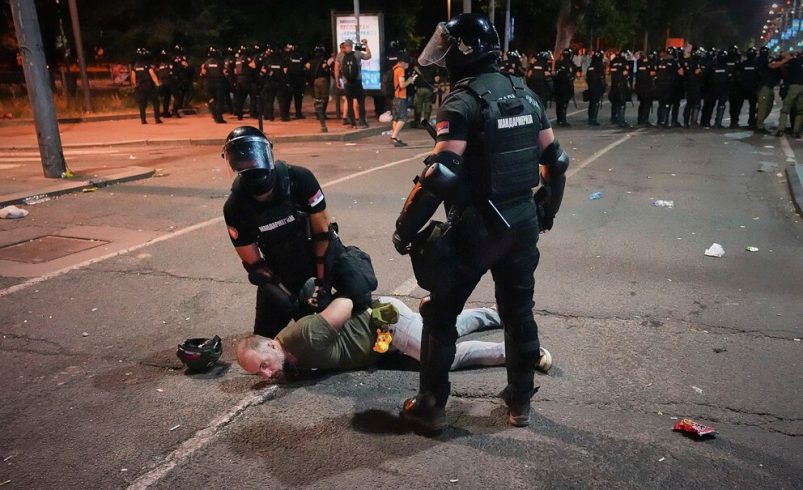
At least one person was seriously injured, and several others suffered minor injuries during clashes between protesters and security forces in the latest opposition demonstrations that took place in Belgrade this Saturday.
The mobilizations, which drew tens of thousands of people according to official sources and independent observers, coincided with the anniversary of the Battle of Kosovo in 1389, a central symbol of Serbian nationalism.
Protests, both for and against the government, began at various points across the capital, particularly in Slavija Square and in front of the Serbian Parliament. There, the unrest escalated with police charges and direct confrontations, resulting in multiple injuries, including at least one serious case.
Interior Minister Ivica Dadic condemned what he described as “brutal attacks on police officers by protesters from an unregistered gathering in Slavija Square,” according to statements reported by public television RTS.

Dadic warned that security forces “will take all necessary measures to restore public order and peace, repel all attacks, and detain anyone who attacked the police.”
Security forces used tear gas and stun grenades to disperse the crowds. Eyewitnesses and journalists confirmed the presence of ambulances and the transfer of injured individuals following the most violent confrontations.
Tensions in Serbia have escalated in recent months due to a series of protests organized by the opposition, which denounces corruption and calls for early elections. These demonstrations intensified after the collapse of the Novi Sad train station, which killed 15 people.
Additionally, the student movement, active for more than seven months, demonstrated its strength during these events. In Pionirski Park, Serbian President Aleksandar Vucic visited a group of gathered students and expressed his support for the mobilized youth.
On the eve of the protest, the president had said that “Serbia does not accept the students’ ultimatum” and that there would be no early elections: “The Serbian state has faced ultimatums from great foreign powers many times. This time, foreign powers, through their local servants, sent us another. The Serbian state’s response has always been the same: no.”
The president, closely aligned with Putin’s Russia, said he felt “proud” of the young people’s mobilization, claiming they aim to “study” and fight for their ideals. “The students have won, and the barricades have lost,” he declared, referencing the difference in turnout compared to protests in March.
The size of Saturday’s protest has been reported inconsistently. According to the police, about 36,000 people participated in the main march registered at the city’s largest square and nearby streets.
However, journalists on the ground and aerial footage suggest the crowd may have been larger. Independent organizations estimated attendance at around 140,000, the highest since the March 15 protest.
AFP reported the crowd waving Serbian flags and holding banners with the names of cities and towns. Protesters chanted slogans such as “We want elections!” throughout the day. In an open letter to the government, students stated, “Elections are the fundamental mechanism of any democratic society, and there is no alternative solution.”
BREAKING: Chaos erupts in the streets of Belgrade (Serbia).
— Global Dissident (@GlobalDiss) June 28, 2025
Riot police have fired tear gas as protesters that demand early elections from the pro-EU government. pic.twitter.com/zaYJN3h930
Vucic, who often labels students as “terrorists,” claimed the protests “cannot take place without violence,” according to Beta news agency. As night fell, new clashes occurred between protesters and security forces. The police’s use of force prompted reactions from both the opposition and human rights organizations.
Saturday’s events highlighted the opposition’s mobilization capacity, the dissatisfaction across social sectors, and the complexity of a scenario where no immediate resolution or agreement on early elections seems likely.
Authorities stated they will continue “restoring order” while the opposition reiterates its intent to keep mobilizing in the streets.