Argentines deported from the U.S on special flight
- September 9, 2025
- 0
Ten Argentine citizens were expelled from the United States in a quiet operation. President Milei avoided clashing with Trump over the deportations.

Ten Argentine citizens were expelled from the United States in a quiet operation. President Milei avoided clashing with Trump over the deportations.
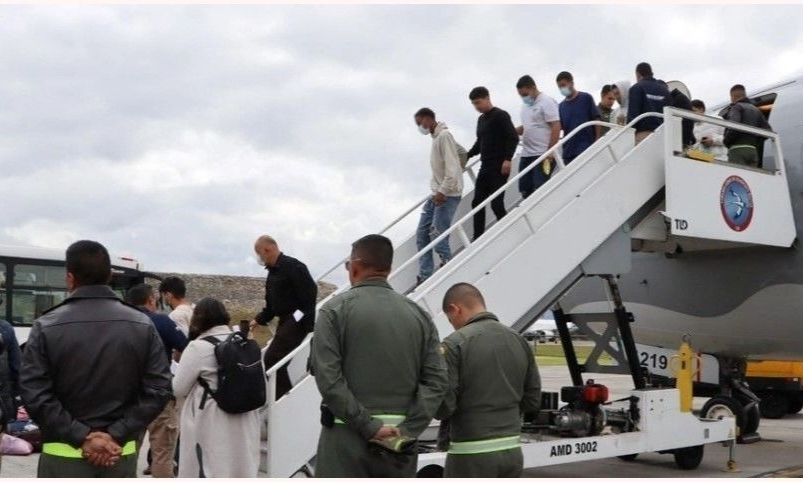
Early Thursday morning, a Boeing 767-300 operated by Omni Air International landed at Ezeiza International Airport carrying ten Argentines deported from the United States.
A charter flight arranged by Donald Trump’s administration made stops in Bogotá, Colombia, and Belo Horizonte, Brazil, before arriving in Buenos Aires. These deportations form part of a broader hardline immigration policy affecting thousands across the Americas.
Arriving at around 3 a.m., the plane touched down under tight secrecy. Passengers entered through a private terminal, although relatives and some media outlets still managed to witness the scene.
Among the deportees was 25-year-old Mario Luciano Robles, who said he was arrested in Texas after crossing into the United States from Mexico. “We’re not criminals. We didn’t kill anyone or commit violence—we just wanted the American dream,” he said in tears, explaining that he is now separated from his wife and child, who remain in Mexico.
Another deportee, Maximiliano García, had lived in the U.S. since 2001. With a valid Social Security number and work permit until 2030, García was detained while trying to adjust his immigration status through his U.S.-born daughter, who had just turned 21.
Immigration officials told him he had a pending deportation order from 2015, something he claims he was never notified about. After weeks in a detention center in Miami, he was forced onto the flight back to Argentina.
“The hatred and racism in Trump’s government is clear. To them, Argentines are criminals,” García said, visibly shaken. His case highlights the human cost of these policies, as his wife and two children remain in Florida. “They’re tearing families apart,” he added.
Argentina’s ambassador in Washington, Alejandro Oxenford, downplayed the situation, saying Argentina is “one of the countries with the fewest deportation cases in the region.”

He emphasized that the number of Argentines expelled was minimal compared to other nationalities and defended U.S. authorities by pointing out that “every country has the right to decide how to deal with people who break its laws.”
Despite government efforts to keep the operation under wraps, the news leaked and sparked political debate. According to officials, President Javier Milei chose not to raise complaints about the treatment of Argentines to avoid straining his close ties with Trump’s White House.
Human rights groups, however, criticized the Milei administration for not providing stronger consular support to those expelled, accusing the government of putting political alignment with Trump above the protection of its citizens.
The operation underscores how U.S. domestic immigration policy reverberates across borders, directly affecting hundreds of Argentine families, many of whom had lived in the country for decades