Chile divided ahead of the elections: two visions of the country face off
- November 12, 2025
- 0
As Chile heads to the polls, leftist Jeannette Jara and right-wing José Antonio Kast close their campaigns amid rising polarization.
As Chile heads to the polls, leftist Jeannette Jara and right-wing José Antonio Kast close their campaigns amid rising polarization.
Just days before Chile’s elections, the country faces deepening political polarization. Government-backed candidate Jara and right-wing contender José Kast wrapped up their campaigns in Santiago with sharp exchanges that underscored two opposing national projects.
Jara, representing the coalition aligned with President Gabriel Boric, addressed a large crowd in Maipú, west of the capital. S
he emphasized social stability and economic security as key pillars of her platform. “In addition to tackling public safety, my government will ensure that every Chilean family can reach the end of the month in peace,” she said.
The socialist candidate framed the election as a choice between “two very different models of the country” — one that “looks to the future,” and another that “centers on hatred, fear, and hopelessness,” referring to Kast’s campaign.
Kast, an ultraconservative lawyer and former presidential candidate, gathered around 10,000 supporters at Santiago’s Movistar Arena.
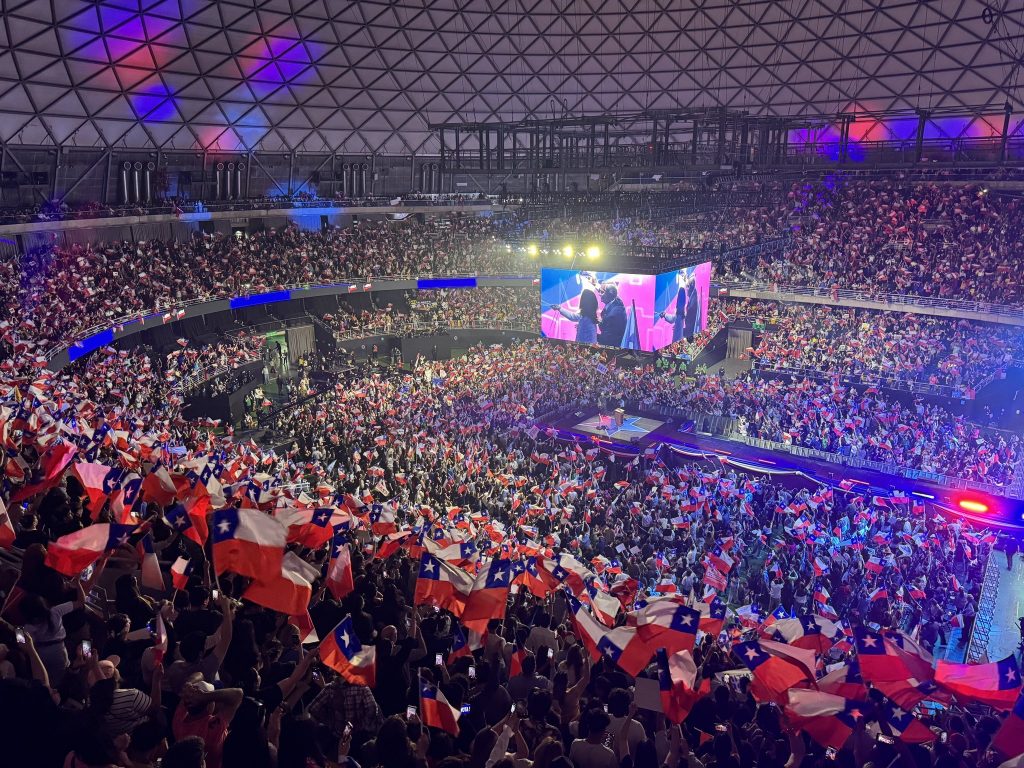
He vowed to create an “emergency government” to fight crime and drug trafficking. “We want a country where criminals are afraid and citizens walk free. Without order, there is no freedom, and without freedom, there is no future,” he declared.
He also accused Jara of being “the continuation of a failed government,” referencing Boric’s current administration, and promised to restore “order and security.”
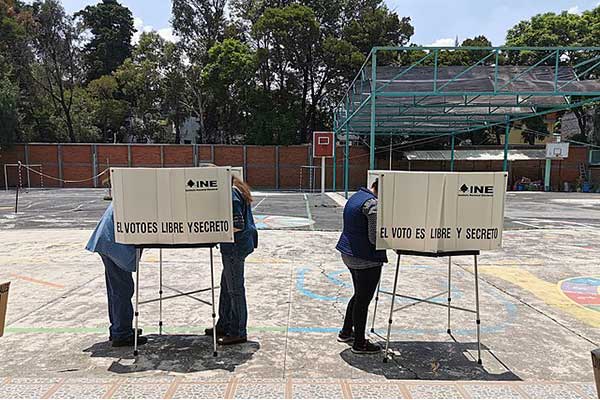
Chile’s Electoral Service (Servel) reported that 15.7 million people are eligible to vote in Sunday’s presidential and parliamentary elections, including nearly 886,000 foreign residents. Voting is mandatory within Chile.
Pamela Figueroa, head of Servel, said the process “is progressing according to plan” and assured voters of “a calm, transparent, and participatory election.”
Government spokesperson Camila Vallejo added that “beyond the obligation, voting is a civic and democratic duty,” stressing that “an informed electorate builds a stronger democracy.”
If no candidate secures an outright majority (over 50% of votes), a runoff will take place on December 14, as has been customary since 1999.
The final presidential debate, held Tuesday, focused on security, illegal financing, and migration — issues that have dominated the race. Eight candidates took part: Jara, Kast, Evelyn Matthei, Johannes Kaiser, Harold Mayne-Nicholls, Franco Parisi, Eduardo Artés, and Marco Enríquez-Ominami, founder of the Puebla Group.
The upcoming vote will determine whether Chile continues along Boric’s progressive path or shifts toward the conservative agenda championed by Kast.