Chile heads toward an ideological showdown as Jara and Kast advance to the runoff
- November 17, 2025
- 0
In Chile, Jara and Kast will face off in a polarized runoff shaped by insecurity, political fatigue and a demand for stronger leadership.
In Chile, Jara and Kast will face off in a polarized runoff shaped by insecurity, political fatigue and a demand for stronger leadership.
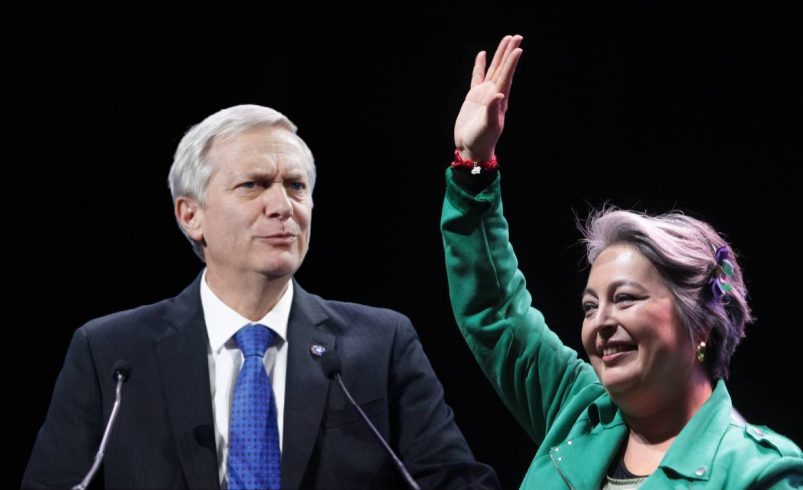
The presidential elections in Chile have opened a new chapter in the country’s political and ideological battle. With 93% of ballots counted on Sunday, Jara and Kast emerged as the top contenders who will compete in the December 14 runoff.
The government-backed candidate secured 26.71% of the vote, while the Republican Party leader captured 24.12%, confirming a polarized scenario that polls had been forecasting for weeks.
The election, which mobilized nearly 15 million Chileans under the mandatory voting system, unfolded amid a climate of uncertainty: rising crime rates, frustration with traditional politics, and widespread dissatisfaction with the state’s handling of public safety.
Shortly after 8:40 p.m., with more than 80% of polling stations counted, Jara celebrated her lead. “Chile is a great country. Let’s not forget who we are, and let’s not allow anyone to make us believe we are not,” she said.
She also emphasized the need to protect democracy: “It took us a long time to win it back, and today it cannot be put at risk again.”
The surprise of the night came from Franco Parisi, who finished third with 19.42% of the vote, despite not setting foot in the country during the campaign. Johannes Kaiser followed with 13.93%, and Evelyn Matthei with 12.7%.
The results redrew the opposition map and positioned Kast as the natural heir to most right-leaning votes in the second round.
At 51, Jeannette Jara has become the most competitive candidate the governing coalition has fielded since the beginning of Boric’s administration.
A lifelong member of the Communist Party since she was 14, her campaign surged thanks to a style that evades stereotypes: moderate, pragmatic, willing to negotiate, and focused more on social needs than on ideological purism.
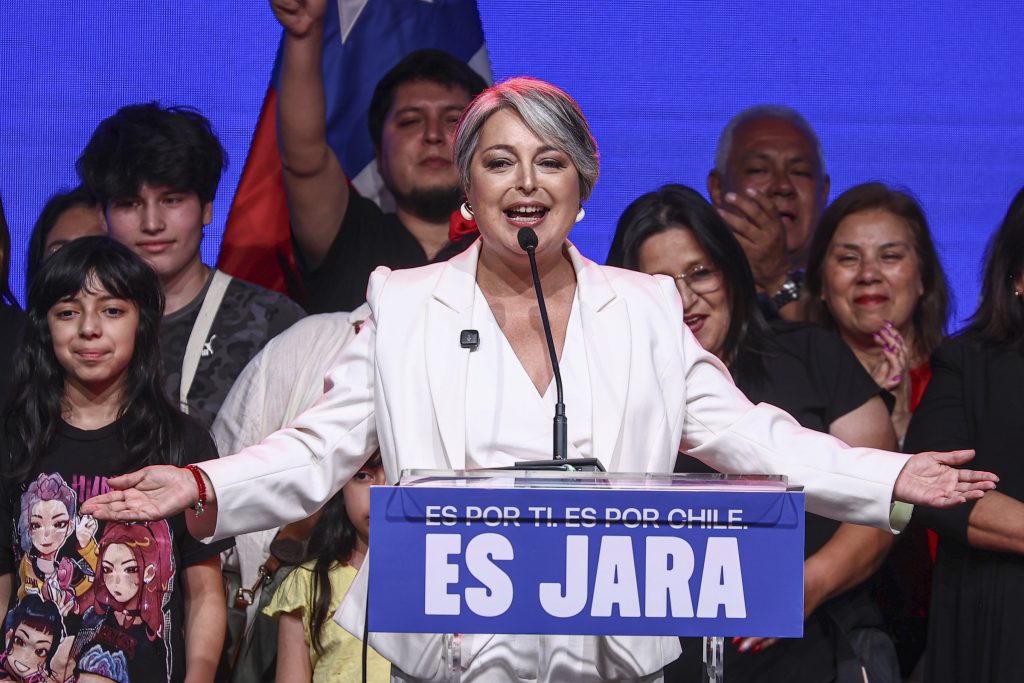
“Chile is like a family. Not everyone thinks the same, not everyone loves the same, but it’s still a family,” she often says on the campaign trail.
Her narrative highlights her working-class background: born in a poor neighborhood in northern Santiago, she worked in various informal jobs while studying public administration and law.
Her national profile rose during her tenure as Minister of Labor under Boric, where she spearheaded two landmark reforms: reducing the workweek from 45 to 40 hours and initiating changes to the private pension system.
In this campaign, Jara doubled down on security and migration control—issues that historically did not belong to the left’s core agenda. She promised that public safety would be a “top priority from day one” and proposed strengthening coordination between municipalities, police forces and prosecutors.
On the opposite end of the spectrum, José Antonio Kast, a 59-year-old lawyer, once again demonstrated his ability to unify the right around a forceful narrative of law and order.
The son of a former Nazi soldier and brother of a minister in Pinochet’s dictatorship, Kast represents a hard-right movement that has successfully tapped into citizen anger and the demand for harsher crime policies.
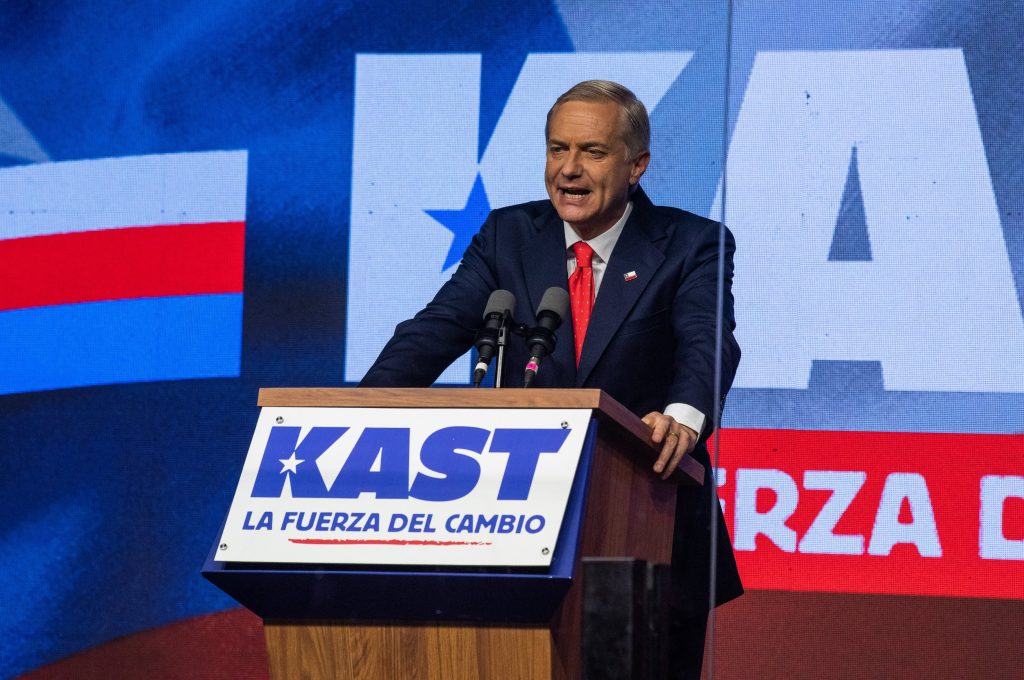
This is his third presidential run, and he remains the central figure of the Republican Party, which he founded in 2019. Allies describe him as a politician with a friendly public demeanor yet a tight grip on internal party control.
Throughout the campaign, he has not shied away from symbolic gestures: admitting he carries a five-shot revolver and delivering one of his speeches behind bulletproof glass —a setup his supporters interpret as reflecting the “state of threat” he denounces.
Unlike previous races, he muted his ultraconservative stances on abortion and same-sex marriage to focus almost exclusively on the theme of security. He even launched a countdown clock marking the days until —as he vows— he begins mass deportations of irregular migrants. “If they don’t leave voluntarily, we will go get them,” he repeats at every rally.
With Jara positioned as the leader of a modernized center-left and Kast consolidated as the face of the hard right, Chile now heads toward a runoff defined by two opposing visions of the country’s future.
While the government candidate will try to attract moderate voters and those wary of authoritarian drift, the Republican leader will rely on the growing electorate demanding strong order-driven policies.
Both candidates will aggressively court the supporters of Parisi and Matthei, whose votes will be crucial in determining the outcome in a country where polarization continues to deepen and security has become the dominant public concern.
On December 14, Chile will not only choose Gabriel Boric’s successor —it will also decide what kind of nation it wants to be in the years ahead.