Japan–China Tensions Reach New Peak Amid Security Alerts and Military Deployments
November 19, 2025
0
Japan and China face their worst confrontation in decades, with security warnings, diplomatic clashes and military mobilization escalating the regional crisis.
The escalating diplomatic crisis between Japan and China has entered its most turbulent phase in decades, pushing both governments to issue security warnings, mobilize military assets, and trade increasingly hostile statements.
Confrontation—rooted in comments by Japanese Prime MinisterSanae Takaichiregarding the defense of Taiwan—has rapidly spilled over into tourism, financial markets, and even entertainment.
The situation intensified after Takaichi told Parliament that an armed operation by China against Taiwan could justify Japan deploying troops to support the democratic island. Beijing considers Taiwan part of its territory and has not ruled out using force to bring it under its control.
Takaichi, the first woman to govern Japan, argued that such a conflict could directly endanger Japanese security due to the geographic proximity of the islands.
In response, Tokyo issued a rare safety warning to its citizens in China, urging them to stay alert, avoid large crowds, and be cautious about their behavior in public spaces.
“Pay attention to your surroundings and avoid areas with large gatherings or places frequently visited by Japanese nationals,” the embassy wrote in a notice published Monday.
It also advised residents and travelers to keep a low profile and distance themselves immediately from any suspicious individuals.
Government spokesperson Minoru Kihara stated Tuesday that the advisory was based on a “comprehensive assessment of the political and security environment” in China, as well as local social conditions.
China plans to respond
Beijing reacted strongly. Last week, China advised its own citizens to “avoid traveling to Japan in the near future,” a move with significant economic implications since Chinese visitors represent nearly a quarter of Japan’s tourism market.
When asked about Tokyo’s new advisory, Foreign Ministry spokesperson Mao Ning said China “will continue to safeguard the safety of foreign nationals in the country in accordance with the law.”
The diplomatic confrontation escalated further after top Japanese diplomat Masaaki Kanai met with his Chinese counterpart Liu Jinsong to discuss Takaichi’s remarks. Mao Ning confirmed that Beijing issued a “strong protest” during the talks, calling Takaichi’s statements a blatant violation of international norms and damaging to the political foundation of Japan–China relations.
Tensions deepened after the Chinese Consul General in Osaka, Xue Jian, posted a threatening message on X (suggesting metaphorical violence against Takaichi, prompting Tokyo to summon the Chinese ambassador. The post was later deleted.
On Monday, Japan revealed that it had scrambled fighter jets after detecting a suspected Chinese drone operating between Taiwan and Yonaguni, Japan’s westernmost island.
The Ministry of Defense confirmed that the aircraft was detected on November 15 and that the Japan Air Self-Defense Force responded immediately. Kihara added that Chinese coast guard vessels also entered Japanese territorial waters near the disputed Senkaku Islands—called Diaoyu by China—over the weekend.
China remains Japan’s largest source of foreign visitors, with nearly 7.5 million Chinese tourists traveling to Japan in the first nine months of 2025. Driven partly by Japan’s weak yen, Chinese visitors spent over one billion dollars per month in the third quarter—almost 30% of all tourist spending.
Taiwan’s involvement in the China-Japan conflict
Taiwanese President Lai Ching-te criticized China’s actions, saying the situation had “seriously undermined regional peace.” He urged Beijing to act responsibly and refrain from becoming a destabilizing force in the Asia-Pacific region.
The confrontation has also seeped into cultural and economic spheres. Chinese state media reported Tuesday that the release of two Japanese films—Crayon Shin-chan the Movie: Super Hot! The Spicy Kasukabe Dancers and Cells at Work!—had been postponed due to rising tensions.
“Japan’s provocative comments will inevitably affect Chinese audiences’ perception of Japanese films,” said China Film News, an outlet overseen by the National Film Administration.
Financial markets also felt the shock. Japan’s Nikkei 225 index fell more than 3% on Tuesday, reflecting investor anxiety.
Shares in Japan’s tourism and retail sectors plunged earlier in the week after China urged its citizens to avoid traveling to Japan—a blow to an industry heavily reliant on Chinese spending. Aviation analyst Li Hanming reported that approximately 500,000 flight tickets from China to Japan have been canceled since November 15.
Before taking office in October, Takaichi had long been critical of China’s military expansion and geopolitical strategy in the Asia-Pacific.
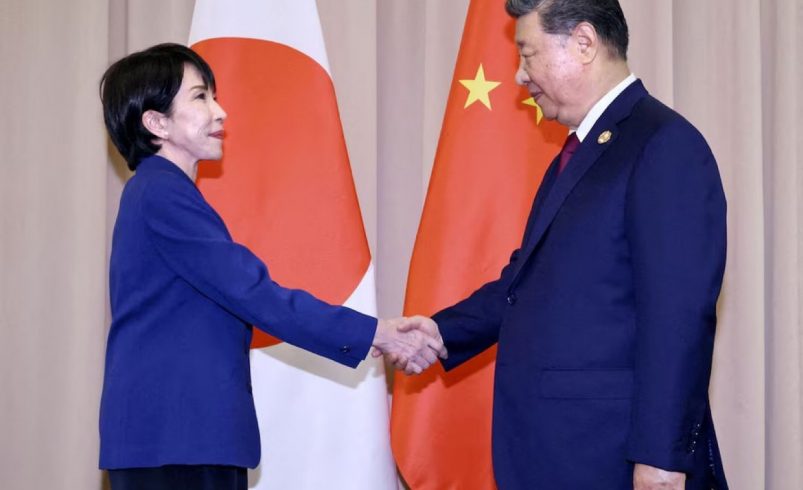
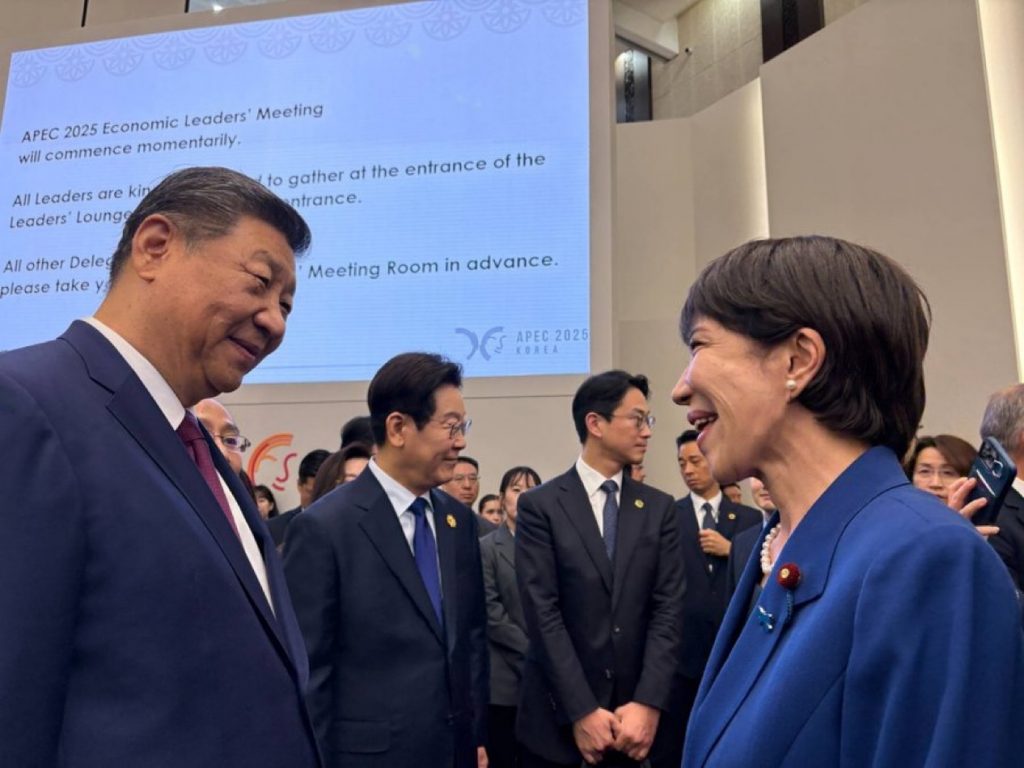
Her remarks came just days after a seemingly cordial meeting with Chinese President Xi Jinping during a summit in South Korea—an encounter that now appears overshadowed by the rapidly deteriorating bilateral relationship.
As both nations harden their positions, diplomatic channels remain strained and military activity continues to intensify. The crisis shows no signs of easing, raising fears that the political standoff between two of Asia’s largest powers could destabilize the broader region.