France toughens its stance in the face of the Russian threat
- November 21, 2025
- 0
France intensifies preparations amid global instability as its top military chief urges the nation to confront the possibility of future conflict with Russia.

France intensifies preparations amid global instability as its top military chief urges the nation to confront the possibility of future conflict with Russia.
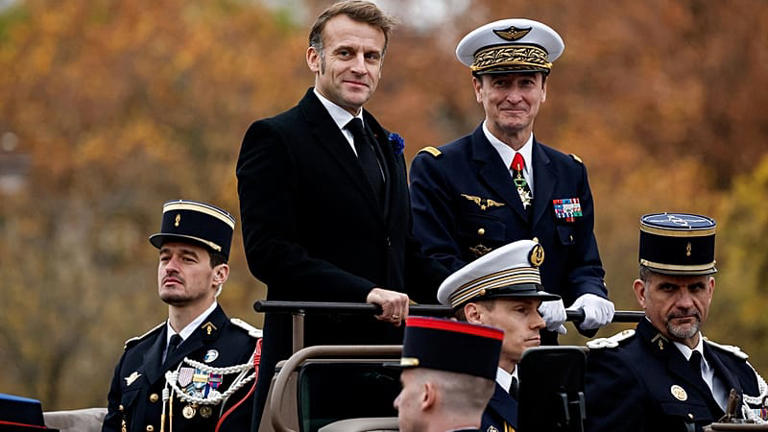
During a major gathering of local officials, France’s Chief of the Defense Staff ignited intense political controversy after warning that the country must be psychologically prepared for war and willing to make profound sacrifices.
His remarks arrive as geopolitical tensions escalate across Europe and concerns grow regarding Moscow’s long-term intentions, placing Francia at the center of debates over readiness, deterrence, and national unity in a shifting global landscape marked by the specter of guerra.
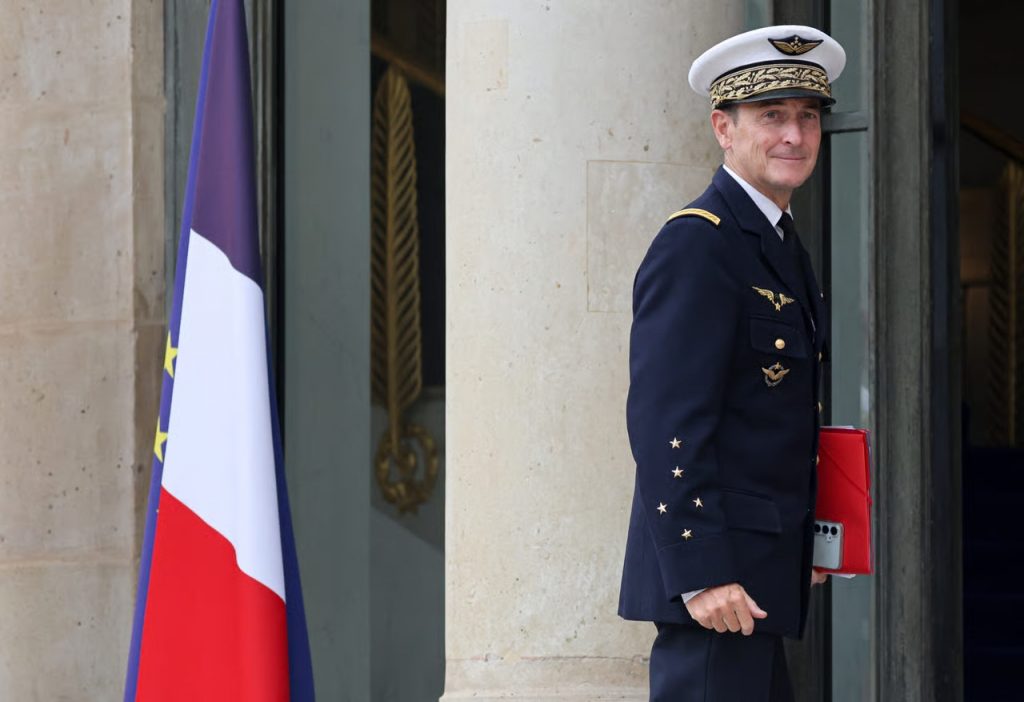
General Fabien Mandon, speaking before the annual congress of French mayors, declared that the country needed to restore its “strength of spirit” and be ready to “accept injury to protect who we are.”
He went further, stating that France must be prepared to “accept losing its children” if national survival were at stake.
The declaration immediately dominated news broadcasts, political debates, and social media platforms, provoking outrage among opposition parties and unease among the general public.
For the left-wing France Unbowed party, the comments crossed an unacceptable line: “A Chief of the Defense Staff should not be saying this,” its parliamentary group declared.
Communist Party leader Fabien Roussel echoed the criticism, pointing out that France already has “51,000 monuments to the fallen” and rejecting what he called “bellicose rhetoric.”
On the opposite end of the political spectrum, National Rally figure Louis Aliot stated that while citizens must be ready to defend the country, the war undertaken “must be just or tied to the very survival of the nation,” adding that he does not believe “many French people are willing to die for Ukraine.”
The backlash underscores a broader societal tension: although 64% of French citizens fear that the conflict between Ukraine and Rusia could eventually reach Francia, public opinion still views war largely as a distant threat.
Many citizens feel protected by their country’s nuclear deterrent and regard large-scale conflict as an unlikely scenario, despite repeated warnings from military and political leaders.
Seeking to contextualize the general’s remarks, Armed Forces Minister Catherine Vautrin defended Mandon, stating that he is “fully legitimate in expressing himself regarding threats.”
She argued that his words had been taken “out of context for political purposes,” reinforcing the government’s position that France must not ignore the deteriorating international environment.
Indeed, French authorities—like many across Europe—have spent the past three years emphasizing the need for strategic vigilance following Russia’s invasion of Ukraine.
The 2025 National Strategic Review, the government’s key defense roadmap, asserts that Francia must “prepare for the possibility of a high-intensity military engagement near Europe between 2027 and 2030, combined with a massive increase in hybrid attacks on its territory.”
This assessment reflects both Moscow’s expanding ambitions and lingering uncertainty about the reliability of the United States as a long-term security partner.
To strengthen societal resilience, the government is also releasing a national civil preparedness guide that outlines how the population should respond to various risks—from natural disasters to cyberattacks and warfare.+
Yet experts note that the French public retains a specific, historical understanding of conflict. According to researcher Bénédicte Chéron, “the representation of war for the French is still that of territorial invasion,” shaped by memories and physical reminders of the two world wars fought on French soil.
This perception makes it challenging for society to envision forms of modern conflict—such as cyberattacks, sabotage, disinformation campaigns, or drone incursions—as part of the spectrum of war.
But this confidence may be misplaced. Héloïse Fayet, a specialist in nuclear deterrence at the French Institute of International Relations (IFRI), warns that “nuclear deterrence cannot protect us from all threats; it was not designed for that, despite what the public may think.”
Fayet notes that such hybrid activities do not correspond to what many French people still consider “real war.” Nevertheless, these actions can destabilize institutions, weaken democratic cohesion, and undermine national sovereignty—conditions that may precede or accompany larger conflicts.
As France approaches pivotal geopolitical years, the debate triggered by General Mandon reflects a deeper national dilemma: how to prepare a society that feels safe for a future that may not be.
Whether his words are interpreted as a necessary warning or an alarming provocation, they highlight the challenges France faces in balancing deterrence, readiness, and public trust while navigating a world increasingly shaped by rivalry, uncertainty, and the looming possibility of guerra—with Rusia at its center.