Growing turmoil in Guinea-Bissau after alleged military coup
- November 24, 2025
- 0
The failed detention of opposition figures heightens the crisis in Guinea Bissau, where the Armed Forces declared a coup amid ongoing tensions in Africa.

The failed detention of opposition figures heightens the crisis in Guinea Bissau, where the Armed Forces declared a coup amid ongoing tensions in Africa.
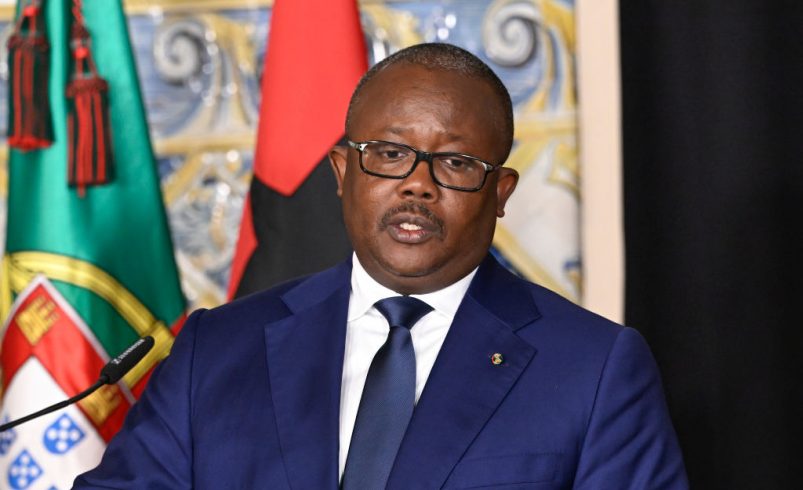
The political instability shaking Guinea Bissau in Africa intensified this week after opposition candidate Fernando Dias da Costa claimed he narrowly escaped an attempted arrest by soldiers involved in an alleged military coup.
His testimony fueled renewed speculation that outgoing president Umaro Sissoco Embaló may have staged an autogolpe as tensions grow following Sunday’s general elections.
Dias da Costa explained that he and fellow opposition leader Domingos Simoes Pereira were targeted shortly after meeting with observers from the Economic Community of West African States (ECOWAS) and the African Union.
In a video shared on Simoes’s Facebook account, the candidate said the arrest was thwarted by supporters present at the campaign headquarters.
“We left through the back doors. They chased us, but we managed to escape,” he said, adding that he is now “in a safe place.”
He urged the population to mobilize “en masse” to defend the election outcome and safeguard democracy. Dias da Costa also demanded the immediate release of Simoes Pereira and all others detained in the military operations.
“He lost the election and knew the final results would be read the next day. So he decided to invent something called a coup d’état,” he argued.
Tension escalated sharply when the Armed Forces announced on national television that they were assuming “all powers of the state,” suspending the electoral process.
The self-styled Military High Command for the Restoration of National Security and Public Order imposed sweeping emergency measures: closure of public institutions, suspension of media activity, and the shutting of all land, sea, and air borders.
Military spokesman Dinis N’Tchama claimed these steps were necessary to counter “politicians attempting to destabilize the country.”
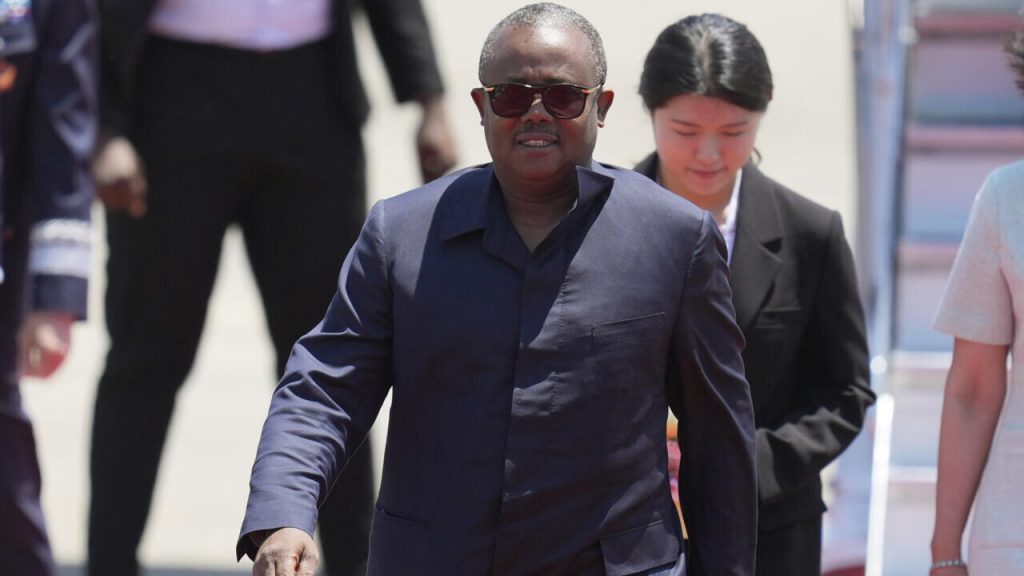
Dias da Costa called on the African Union to clarify what happened, noting that its observers were present during key moments. He also urged ECOWAS to “assume its responsibility,” given its oversight of the election and awareness of previously reported irregularities.
ECOWAS and the African Union released a joint statement expressing “deep concern” and lamenting “a blatant attempt to disrupt the democratic process just as the country awaited the announcement of results.”
One of the most controversial points emerged when Dias da Costa insisted that President Embaló had fabricated the coup narrative as a means of avoiding political defeat.
The statement, also signed by the West African Elders Forum, stressed that both candidates had previously assured observers of their willingness to accept the people’s will.
International organizations urged ECOWAS and the African Union to restore constitutional order and demanded the release of detained officials, including key members of the electoral authority.
The communiqué also praised the “civic commitment” of Guinea Bissau’s voters and the professionalism of election workers and security personnel, stating that the voting process remained one of the few positive aspects in an otherwise volatile scenario.
The United Nations echoed these concerns. UN Secretary-General António Guterres called for “restraint and respect for the rule of law,” according to his spokesperson Stéphane Dujarric, who emphasized that the organization is monitoring developments closely given the country’s long history of instability.
For now, Guinea Bissau remains trapped in political ambiguity. The whereabouts of detained officials, the authenticity of the coup allegations, and the legitimacy of competing claims of victory all remain unclear.
On the streets, anxiety continues to rise as the nation awaits a resolution in a country long shaped by coups, power struggles, and cycles of political uncertainty.