Benin asserts full control after failed coup attempt as regional forces mobilize
December 9, 2025
0
Benin’s government says a coup d’état attempt by rogue soldiers has been defeated, while West Africa prepares regional support to safeguard constitutional order.
Benin’s President Patrice Talon announced on Sunday that the situation in the country was “fully under control” following a failed coup d’état attempt that shook the capital, Cotonou, throughout the day.
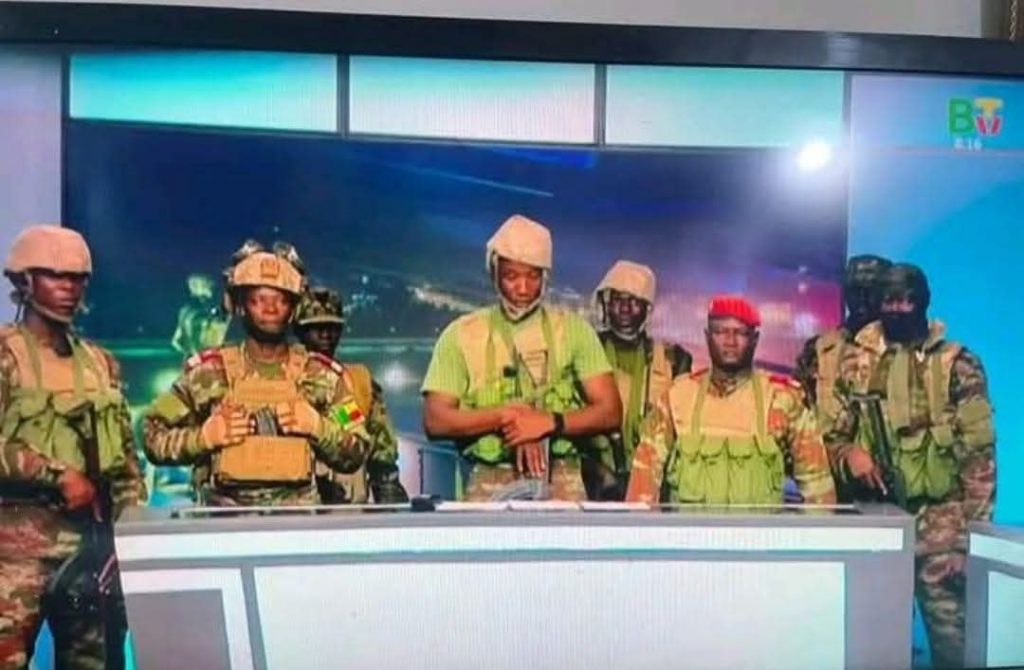
Talon’s message was broadcast on national television hours after mutinous soldiers declared they had removed him from office.
Authorities have since confirmed the arrest of a dozen soldiers, including the alleged masterminds.
The attempted takeover unfolded amid growing political volatility across Africa, particularly in West Africa, which has been rattled by a series of military seizures of power in recent years.
Early Sunday, gunfire was reported in several neighborhoods of Cotonou and a group of soldiers appeared on state television claiming to suspend the Constitution and depose the president.
Their announcement sent immediate shockwaves through the population, prompting residents to clear the streets as armored vehicles moved through strategic areas.
In his televised address, Talon emphasized that the swift reaction of loyal forces was crucial in preventing the uprising from gaining ground. “The rapid mobilization of our security forces allowed us to neutralize these adventurers,” he said, insisting that the betrayal would not go unpunished.
He also noted that some individuals had been “held by the fleeing mutineers” but assured that they would be found and brought to safety.
Military and security sources that those detained included the leaders of the attempted coup.
The mutineers were led by Lieutenant Colonel Pascal Tigri, who announced Talon’s “dismissal” and the creation of a “Military Committee for the Rebuilding of the Republic” during their brief control of the national broadcaster.
Their statement promised a “new era” marked by justice, work and fraternity for the Beninese people.
What happened to the rebels?
The rebel soldiers claimed to dissolve all institutions and suspend political parties. Their takeover of the national television station, however, was short-lived.
By midday, troops from the Republican Guard had retaken the premises, and the presidency issued a statement clarifying that the mutineers “only controlled the television” while the regular army was restoring order.
Early in the morning, the French Embassy in Cotonou reported gunfire near the presidential residence, urging its citizens to remain indoors.
The U.S. Embassy similarly warned that it was monitoring “reports of gunfire and unconfirmed indications of a military coup.”
By late morning, Cotonou resembled a locked-down city: streets were deserted, access to online media outlets was disrupted and armored vehicles patrolled key locations. Shortly after, a military source confirmed that loyalist forces had regained control and that the president was safe.
Benin’s Interior and Public Security Minister, Seidou, delivered a brief televised address confirming the failure of the coup attempt.
He stated that a small group of soldiers had tried to “destabilize the State and its institutions,” but that the collective response of political leaders and the population had ensured the stability of the Republic. He urged residents to resume their activities normally.
Talon, 67, has been in power since 2016. His administration has promoted economic reforms and development initiatives, though critics accuse him of democratic backsliding and suppressing opponents.
In 2021, two key opposition figures—Joël Aivo and Reckya Madougou—were sentenced to ten and twenty years in prison, respectively, on charges contested by human-rights organizations.
The president was expected to leave office in April 2026 after completing his two constitutionally permitted terms. Former Finance Minister Romuald Wadagni had emerged as the ruling party’s preferred successor.
The response of the African community
ECOWAS(Economic Community of West African States) responded swiftly, announcing the immediate deployment of elements from its Standby Force, with troops from Nigeria, Sierra Leone, Côte d’Ivoire and Ghana.
Regional bloc said the deployment aimed to support “the Government and the Republican Army of Benin” and help preserve constitutional order. West Africa has been deeply affected by military takeovers in recent months, including last week’s coup in Guinea-Bissau.
The failed coup attempt in Benin adds to a broader pattern of institutional disruption across Africa, where electoral disputes, economic pressures and political rivalries have weakened democratic structures.
Although the uprising was quickly contained, it underscored the fragility of the political landscape and the persistent challenges facing governments across the region as they work to maintain stability.