Monumental Discovery in Tanis Rewrites Key Chapters of Ancient Egypt
- December 10, 2025
- 0
Archaeologists announce a major discovery in Egypt, where a funerary assemblage solves a mystery of the antiquity that had puzzled experts for decades.

Archaeologists announce a major discovery in Egypt, where a funerary assemblage solves a mystery of the antiquity that had puzzled experts for decades.
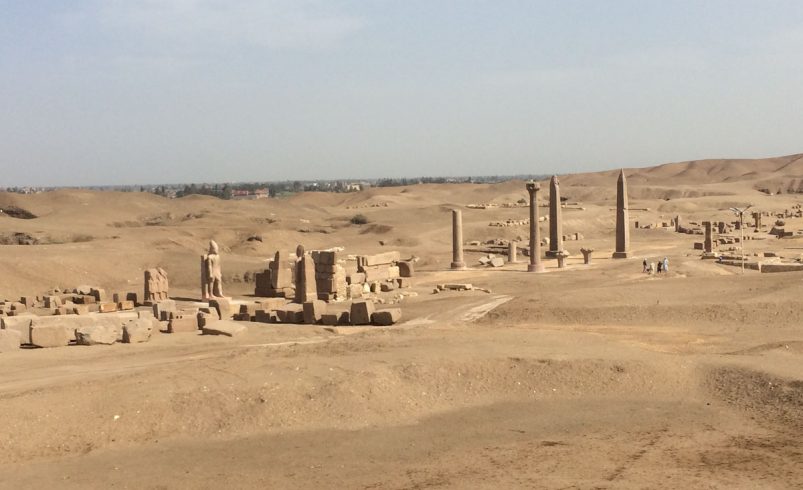
The funerary rites of ancient Egypt continue to astonish, but the newest discovery in the royal necropolis of Tanis has left even veteran scholars in disbelief.
It is a monumental find that the Ministry of Tourism and Antiquities has described as the most significant event in Egyptian antiquity in nearly eighty years, comparable to the great mid-20th-century discoveries.
What began as a routine cleaning intervention inside the tomb of Pharaoh Osorkon II quickly evolved into a historic revelation.
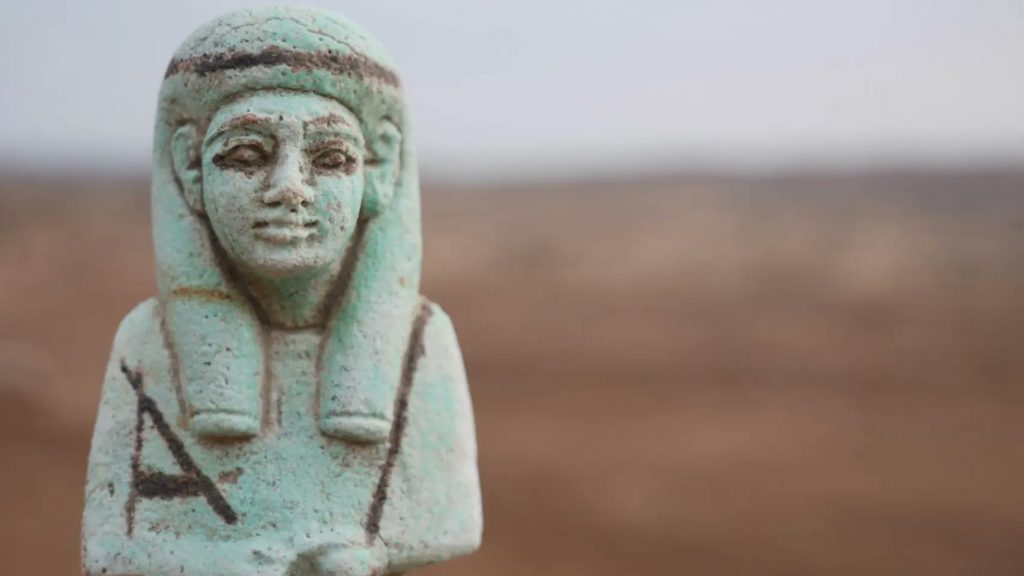
During the technical work, the French archaeological mission uncovered in the northern chamber a funerary assemblage of 225 ushabtis—figurines intended to serve the deceased in the afterlife—exceptionally preserved beneath layers of silt and clay. The pieces belonged to Pharaoh Sheshonq III, a prominent ruler of the 22nd Dynasty.
Importance of the find lies not only in the quantity of objects but also in their context. The ushabtis were discovered beside an enigmatic uninscribed granite sarcophagus whose identity had sparked debates for decades.
Based on the evidence now documented, Egyptologists have finally resolved the long-standing question: the sarcophagus belongs to Sheshonq III. This identification marks a turning point in the study of Tanis and its royal burials.
For years, the tomb of Osorkon II had posed riddles to researchers, given the presence of elements that did not match his profile. The anepigraphic sarcophagus—initially found without a clear context—was one of the site’s greatest enigmas.
Newly confirmed link to Sheshonq III, supported by the ushabti assemblage and the funerary layout, represents a major step forward in understanding the complex history of royal burials during the Third Intermediate Period.
Researchers must now determine whether the pharaoh was originally interred in this chamber or whether, as was common during turbulent periods of Egyptian history, his remains and funerary goods were relocated to protect them from looting.
Multiple reburials and tomb reuse were widespread strategies designed to safeguard treasures or evade environmental damage.
The value of the discovery extends further. In the same chamber, previously unknown inscriptions and carvings have come to light, potentially reshaping the understanding of ritual practices and the use of royal tombs during the Third Intermediate Period.
Their iconography and content offer clues about the evolution of funerary rituals, royal status and political shifts across the era.
The find forms part of a broader conservation project in Tanis, supported by Egypt’s Ministry of Tourism and Antiquities.
The initiative includes installing a modern protective shelter over the funerary structures, reducing the salinity levels that threaten the ancient stone and implementing a large-scale cleaning and restoration program to ensure the site’s preservation for generations.
Once a capital in the eastern Nile Delta across several dynasties, Tanis is regaining its central role in Egyptian archaeology. With this discovery, experts believe additional chambers, hidden passages and unexplored remains may soon emerge.
For many, this breakthrough may represent only the beginning of a new golden era in the study of ancient Egypt, where each newly recovered artifact helps illuminate the enduring mysteries of a vibrant antiquity buried beneath the sands.