Susie Wiles accuses Vanity Fair of distorting her remarks about Trump, Vance and Musk
December 18, 2025
0
The White House chief of staff said Vanity Fair took her words out of context about Trump, the United States, and Musk, creating a negative narrative.
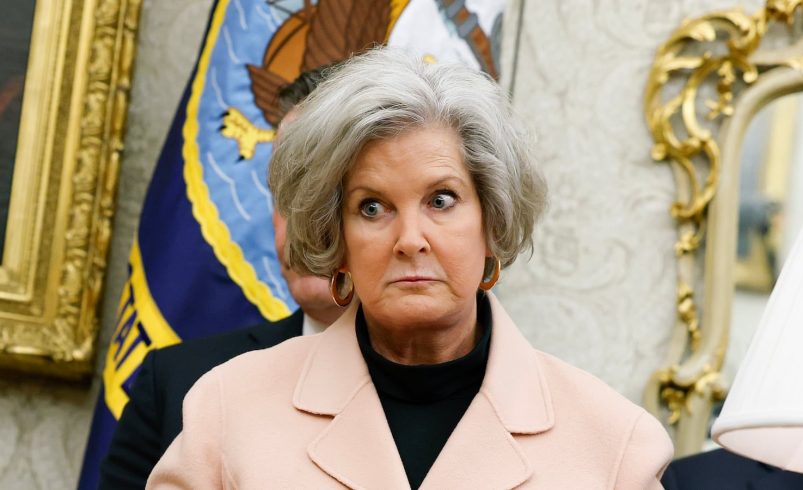
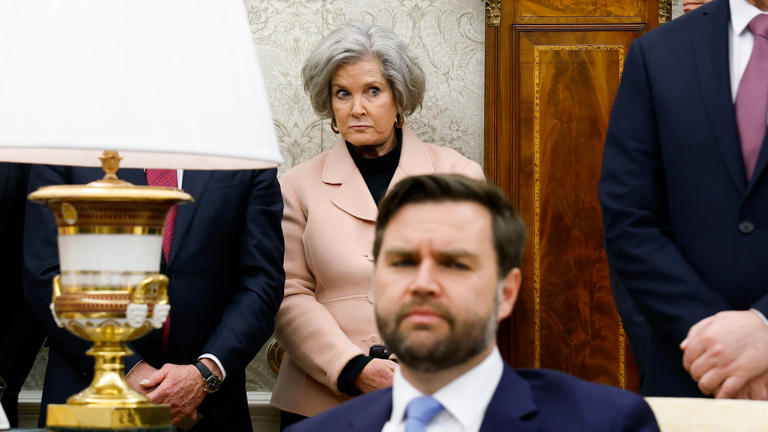
White House Chief of Staff Susie Wiles strongly pushed back against a Vanity Fair article that portrayed a critical picture of President Donald Trump’s inner circle, including Vice President JD Vance and billionaire Elon Musk.
According to Wiles, the magazine ignored key context and selectively edited her remarks to depict the Trump administration in the United States as chaotic and dysfunctional.
The article, based on nearly a dozen interviews with Wiles, quoted her describing Trump as having an “alcoholic personality,” labeling Vance a “conspiracy theorist,” and portraying Musk as an eccentric figure whose behavior raised eyebrows during his time advising the government.
Shortly after publication, Wiles took to X to dispute the framing of the piece and defend both herself and the president.
“Important context was ignored, and much of what I and others actually said about the president and the team was left out,” Wiles wrote. She argued that Vanity Fair deliberately crafted an overwhelmingly negative narrative about the White House during Trump’s second term.
Who is Wiles to Trump’s world?
At 68, Wiles is widely regarded as one of the most powerful figures in the current administration. After playing a central role in Trump’s successful 2024 campaign, she became the first woman to serve as White House chief of staff.
Her professional relationship with Trump dates back years, including her work as his Florida campaign director in 2016 and as a key architect of his fundraising operations.
One of the most controversial elements of the article involved Wiles’s comments about Trump’s “alcoholic personality.” In the full context, she explained that growing up with an alcoholic father gave her insight into managing strong, dominant personalities.
Although Trump does not drink, Wiles said he governs with a mindset that nothing is impossible for him—a nuance she says the magazine distorted.
The piece also explored Trump’s relationship with Vice President JD Vance, who was once a vocal critic of Trump before becoming a close ally.
Wiles suggested that Vance’s shift was partly political. Asked about the article, Vance said he had not read it and dismissed the controversy, adding that he only believes conspiracy theories that are “actually true.”
Musk’s role and his departure from government
The sharpest remarks attributed to Wiles concerned Elon Musk, who previously led efforts to slash federal spending through the Department of Government Efficiency.
She described Musk as a self-admitted ketamine user who sometimes slept in a sleeping bag inside the Executive Office Building. Wiles also acknowledged deep disagreements with Musk over the pace and scope of government cuts.
In particular, she criticized the dismantling of the U.S. Agency for International Development (USAID), a move associated with Musk’s tenure.
“No rational person thought the way USAID was eliminated was good,” she said, while emphasizing the agency’s long-standing role in U.S. foreign policy.
Following the article’s release, the White House rallied behind Wiles. Press Secretary Karoline Leavitt said in a statement that Wiles had helped Trump achieve “the most successful first months of any presidency in U.S. history.”
She accused Vanity Fair of engaging in “bias by omission” and taking Wiles’s words “completely out of context.”
Neither Trump nor Musk commented publicly on the controversy. Still, the dispute has once again highlighted tensions between the White House and major media outlets, as well as the intense personalities and internal frictions that continue to shape Trump’s second administration.