High-speed tragedy: Spain faces its deadliest train crash in years
- January 18, 2026
- 0
A collision between high-speed trains near Córdoba shocks Spain, raises questions of science and safety, and leaves dozens dead.

A collision between high-speed trains near Córdoba shocks Spain, raises questions of science and safety, and leaves dozens dead.
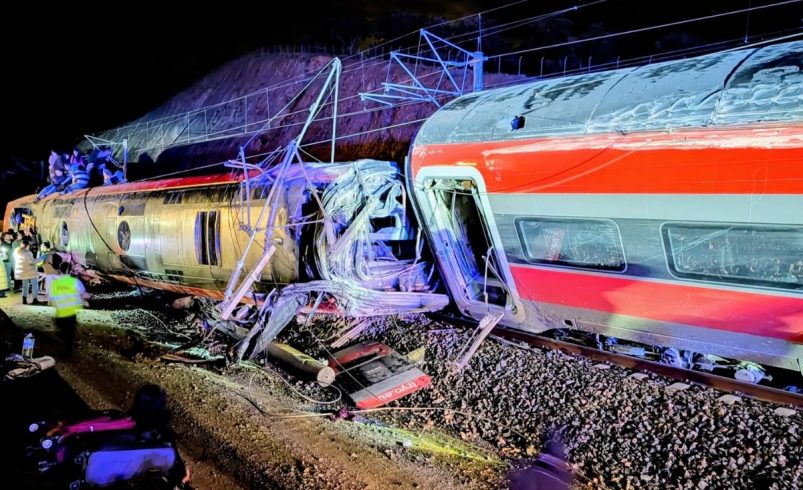
Spain woke up in shock after one of the deadliest railway disasters in its recent history. At least 40 people were killed and more than 150 injured when two high-speed trains collided near the town of Adamuz, in the province of Córdoba, an accident that has reignited debate over rail safety and the role of science in preventing large-scale disasters.
The crash occurred on Sunday at 7:45 p.m., when a privately operated Iryo train traveling from Málaga to Madrid partially derailed and crossed onto the opposite track. At that moment, a Renfe Alvia service bound for Huelva was approaching from the other direction. The impact was catastrophic.
The first two carriages of the Renfe train were thrown off the track and plunged down a four-meter embankment, accounting for most of the fatalities.
Initial reports from emergency services spoke of around ten deaths, but the toll rose steadily as rescue teams worked through twisted metal.
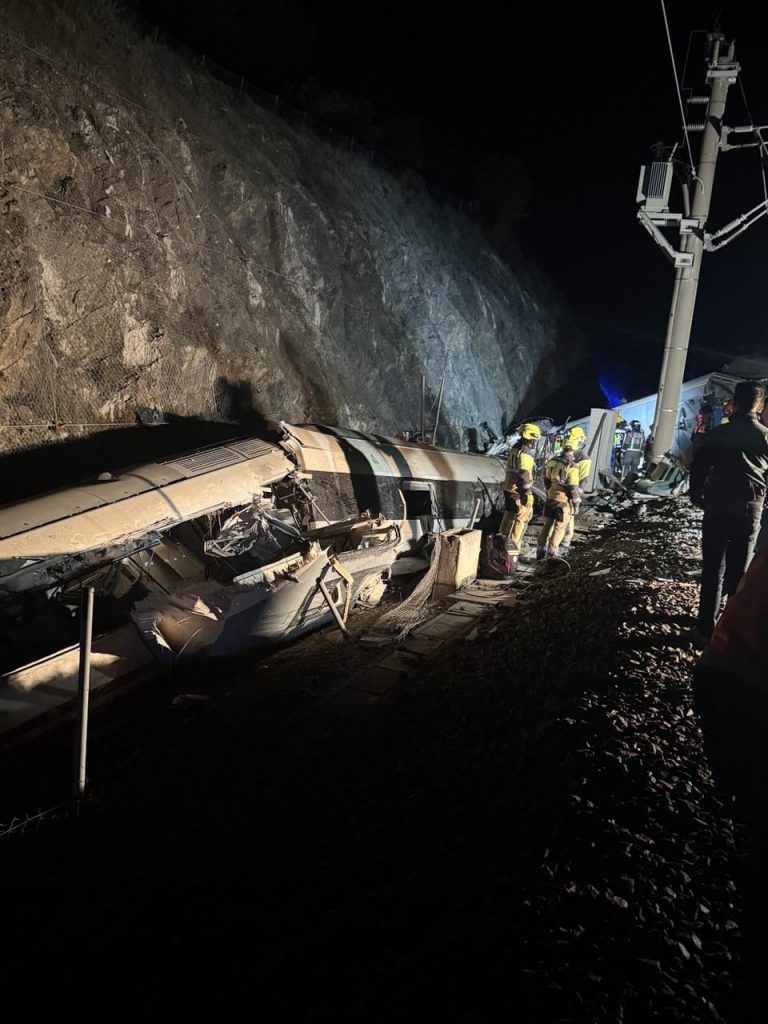
“The carriages are severely deformed, with passengers trapped inside. It is an extremely complex rescue operation,” said Francisco Carmona, head of the Córdoba fire brigade.
All emergency protocols were immediately activated. Firefighters, police, medical teams, and civil protection units worked throughout the night, while ambulances transported the injured to hospitals across Andalusia. A local sports center in Adamuz was converted into a field hospital, and the Red Cross set up assistance points for survivors and relatives.
Rail infrastructure manager Adif confirmed that the Iryo train, carrying 317 passengers, derailed and invaded the adjacent track, triggering the collision with the Renfe Alvia service. High-speed rail traffic between Madrid and southern Spain was suspended indefinitely, disrupting travel nationwide.
Hospitals across the region reinforced their staff. At Reina Sofía Hospital in Córdoba, doctors and nurses were urgently called in. Official figures reported 159 injured patients, with 12 in critical condition.
Survivor testimonies soon emerged, describing chaos, violent shaking, and desperate evacuations. Radio journalist Salvador Jiménez, who was aboard the Iryo train, said the experience felt “like an earthquake.” Other passengers spoke of flying luggage, screams, and emergency hammers being used to break windows.
The political response was swift. Prime Minister Pedro Sánchez declared three days of national mourning and vowed full transparency in the investigation. “We owe the victims and their families the truth,” he said during a visit to the crash site.
Spain’s Royal Household expressed deep concern, and King Felipe VI announced plans to visit the area. Messages of solidarity poured in from across the country, while regional governments offered additional medical and logistical support.
The Railway Accident Investigation Commission has opened a formal inquiry. Early findings indicate the crash occurred on a straight, recently renovated section of track, involving relatively new rolling stock. Transport Minister Óscar Puente described the accident as “highly unusual.”
Technical experts are now focusing on potential infrastructure or mechanical failures. Investigators reportedly identified a broken rail joint at the site, a critical component for high-speed stability.
Here, science, engineering analysis, and data reconstruction will be essential to determine the exact sequence of events.With more than 3,100 kilometers of high-speed rail, Spain is considered a European leader in railway infrastructure.
That status makes the tragedy particularly jarring. In the months before the crash, Adif had acknowledged technical incidents along the Adamuz–Villanueva de Córdoba stretch, a detail that now stands at the center of the investigation.