Honduras Faces a Historic Vote That Could Reshape Its Political Landscape
November 30, 2025
0
A massive voter turnout shook the Honduran political scene, with opposition figures Nasry Asfura and Salvador Nasralla challenging the ruling left amid Trump tensions and institutional fears.
Honduras witnessed one of its most consequential elections in recent years as a massive voter turnout reshaped expectations and placed significant pressure on the ruling left-wing government.
The political climate was charged, marked by public frustration, external interference, and concerns about the role of the military in safeguarding—or undermining—the democratic process.
With 43% of votes counted, the National Electoral Council (CNE) reported that opposition candidates Nasry Asfura, a conservative businessman from the National Party, and former TV host Salvador Nasralla held the lead with 40.54% and 38.99% of the vote respectively.
Meanwhile, the ruling party’s candidate, Rixi Moncada, trailed distantly with under 20%, a dramatic blow to the movement attempting to extend the legacy of President Xiomara Castro.
The electoral atmosphere was heavily influenced by three forces: the unexpectedly high voter participation, political maneuvers from the ruling party, and the polarizing impact of statements from Trump, who warned that U.S. assistance to Honduras could be reconsidered.
These comments struck a nerve in a country whose economy relies deeply on remittances sent by Hondurans living in the United States.
The international dimension intensified when Russia criticized Trump’s remarks, an extraordinary development for Honduras, traditionally absent from global geopolitical tensions. With 128 congressional seats and 298 mayoral posts also at stake, global scrutiny reached unprecedented levels.
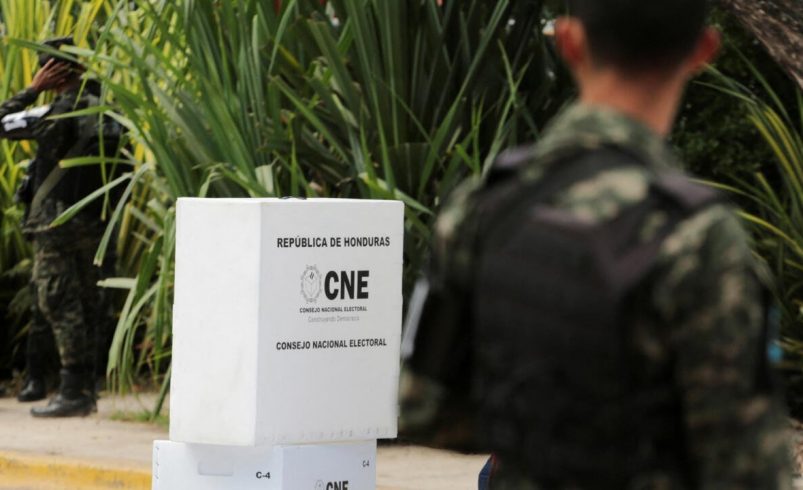
CNE president Ana Paola Hall issued a firm reminder that the Armed Forces must respect the constitutional order. Small groups resembling Venezuela-style colectivos appeared at some polling stations, but citizen determination prevailed.
As Honduras awaits the final results, the nation finds itself at a critical crossroads. With competing claims of victory and institutions under strain, the outcome will shape not only who governs next, but also the trajectory of Honduran democracy.
Honduras’ candidates
Despite electoral regulations, the three major candidates proclaimed themselves winners throughout the day. Nasralla, favored by pre-election leaks showing him ahead by more than ten points, emphasized the public’s call for change.
“What is won at the polls must be respected across the country,” said the 72-year-old, who positioned himself as an alternative to both the discredited National Party—still stained by former president Juan Orlando Hernández’s narcotrafficking scandal—and the current government closely aligned with Cuba and Venezuela.
Betting markets also mirrored Nasralla’s momentum, giving him over 60% odds shortly after voting ended.
Asfura, widely known as “Papi a la orden,” projected confidence as well. His campaign argued that its organizational strength and support from Washington positioned him for victory. “We know our numbers,” he said, surrounded by euphoric supporters.
The ruling party, however, insisted throughout the day that Moncada was winning. After polls closed, officials from Libre—guided by former president Mel Zelaya—claimed she would secure 38.06% of the vote, contradicting all official data. “The refoundation of Honduras continues,” they declared.
Analysts agreed that the long lines signaled dissatisfaction with the status quo. “People want change. I waited three hours to vote—never seen anything like this,” said political analyst Kenneth Madrid. The CNE repeatedly confirmed high turnout, far exceeding participation in past elections.
At polling centers, the sentiment was similar. “Governments arrive to serve minorities, not the people. We want change,” said María Valencia, a Garifuna vendor observing the unusually heavy crowds in Tegucigalpa.
Tension rose when General Roosevelt Hernández suggested he would not immHonduras Faces a Historic Vote That Could Reshape Its Political Landscape ediately recognize preliminary CNE results. A leaked report later revealed he instructed troops not to intervene even if pro-government groups attempted to disrupt polling stations.