Costa Rica proposes harsher penalties for abortion in new legal initiative
- January 30, 2025
- 0
The Costa Rican government seeks stricter laws, increasing prison terms for abortions to protect unborn life and strengthen public security

The Costa Rican government seeks stricter laws, increasing prison terms for abortions to protect unborn life and strengthen public security
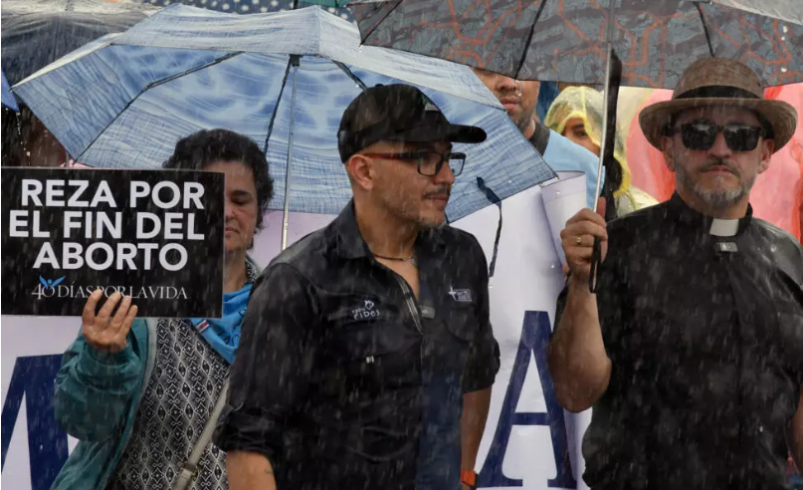
The government of Costa Rica announced a new legal initiative that would impose harsher penalties for abortion. Under the proposed law, women who undergo an abortion could face up to six years in prison, while those who perform abortions without the woman’s consent could face up to twelve years.
“This is about defending the lives of Costa Ricans who are not yet born. Abortion is nothing less than murder, and the penalties must be strengthened,” said Presidential Minister Laura Fernández during the weekly government press conference.
Currently, Costa Rica only allows therapeutic abortions, and women who cause or consent to their own abortion face prison terms ranging from one to three years. Those performing abortions without consent face three to ten years in prison.
The new proposal would increase penalties significantly. Women who cause or consent to an abortion would now face four to six years in prison.
Abortion practitioners performing the procedure without the woman’s consent could face six to twelve years. If the procedure is done with the woman’s consent, the proposed sentence would range from four to six years, compared to the current one to three years.
President Rodrigo Chaves described the issue as “philosophically and morally complex,” likening a woman’s body to a plane from which a person is being dropped when an abortion occurs.
Therapeutic abortion has been legal in Costa Rica since 1970, but it wasn’t until December 2019 that President Carlos Alvarado enacted a technical decree guiding medical personnel on when the procedure can be applied.

The government emphasizes that these changes are not only about morality but also about improving public security by establishing clearer legal boundaries and ensuring that all parties understand the consequences of violating the law.
Officials assert that the legislation will protect vulnerable populations and provide a stronger framework for enforcement, reflecting the state’s commitment to both human life and the overall safety of society.