Cyberattack Disrupts European Airports, Brussels Cancels Flights
- September 21, 2025
- 0
A cyberattack on check-in and boarding systems affects airports across Europe, while Brussels cancels flights and warns passengers about operational disruptions.

A cyberattack on check-in and boarding systems affects airports across Europe, while Brussels cancels flights and warns passengers about operational disruptions.
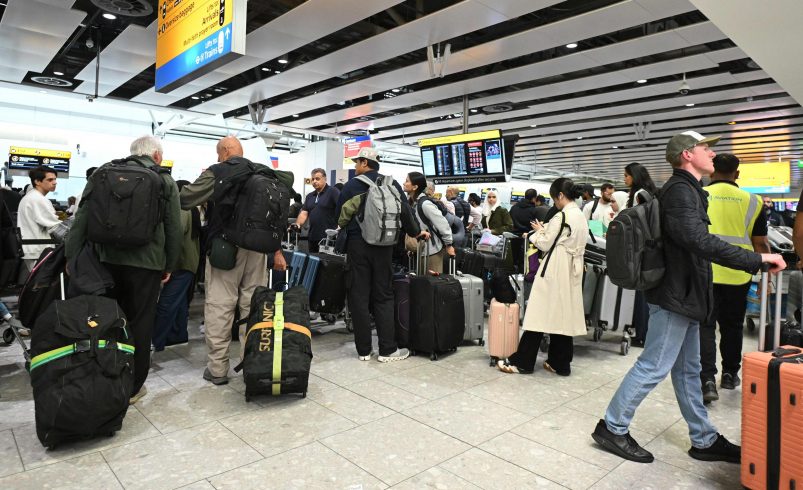
Airports across Europe are still dealing with logistical challenges following a cyberattack targeting check-in and boarding systems provided by Collins Aerospace, a global aviation and defense services provider.
The incident, identified on Saturday, has caused delays and cancellations, mainly affecting airports in Brussels, London-Heathrow, and Berlin-Brandenburg.
In the Belgian capital, the airport requested airlines cancel half of their scheduled departures for Sunday and Monday to reduce queues and avoid last-minute cancellations. On Sunday, 44 departure flights and 28 arrivals were canceled. Social media advisories urged passengers to check their flight status before heading to the terminals.
The affected software, MUSE, developed by Collins Aerospace, is used by airlines worldwide. According to parent company RTX, the impact is limited to electronic check-in and baggage handling and can be mitigated through manual processes. However, the company has not disclosed who is behind the attack.
In Berlin, passengers are advised to use virtual check-in systems due to longer-than-usual wait times. Although delays have stabilized, the airport expects increased traveler flow following the Berlin Marathon, which attracted tens of thousands.
Heathrow reported that most flights have continued operating, but passengers are advised to verify schedules and avoid arriving too early to prevent congestion.
Spanish airports remain operational with no significant disruptions, aside from flights connecting to affected European hubs. Ireland reported minor issues at Dublin and Cork airports.

Collins Aerospace, recently contracted by NATO, is among the world’s largest defense and aviation companies.
This cyberattack is part of a series of digital disruptions impacting governments and global businesses, including sectors like healthcare, defense, retail, and automotive. Such incidents often involve ransomware or deliberate digital sabotage, paralyzing critical systems to extort payments or cause destabilization.
EU Commissioner for Emergencies and Crisis Preparedness, Hadja Lahbib, highlighted the seriousness: “The cyberattack that paralyzed airports across Europe shows how real and complex current threats are. Our Union Preparedness strategy strengthens coordination and supports member states. We must invest in preparedness to ensure readiness for any eventuality,” she wrote on social media.
While the investigation continues, airport authorities in Brussels and other European locations are working to restore full operations and prevent further delays, emphasizing the critical importance of cybersecurity in transportation infrastructure.