Hurricane Melissa Devastates the Caribbean, Leaving Seven Dead: Jamaica Faces Its Worst Natural Disaster of the Century
October 30, 2025
0
Hurricane Melissa reached Category 5 strength, battering Jamaica and other Caribbean islands with extreme rain, flooding, and at least seven deaths.
Hurricane Melissa reached Category 5 early Monday, becoming the most powerful storm of 2025 and leaving at least seven people dead across Jamaica, Haiti, and the Dominican Republic.
With sustained winds exceeding 280 km/h and a dangerously slow movement, the storm has been described by the U.S. National Hurricane Center (NHC) as “potentially catastrophic.”
Authorities in the Caribbean island declared a national state of emergency and ordered the evacuation of coastal and flood-prone areas. The capital, Kingston, is effectively shut down: airports are closed, public transportation halted, and more than 880 shelters opened nationwide.
Prime Minister Andrew Holness urged citizens to “stay indoors and follow evacuation orders.” In a message on X, he wrote, “We will overcome this storm and rebuild stronger.”
The World Meteorological Organization (WMO) warned that Melissa could become “the storm of the century” for Jamaica, surpassing the historic Hurricane Gilbert of 1988. Waves of more than five meters have already hit the southern coast, and forecasters predict up to 100 centimeters of rainfall in mountainous regions.
“This extreme rainfall potential, due to the storm’s slow movement, will create a catastrophic event for Jamaica,” said Jamie Rhome, deputy director of the NHC. Jamaican Information Minister Dana Morris Dixon added that the “soil is fully saturated,” warning of “widespread flooding and landslides.”
Melissa: in catastrophic numbers
The Red Cross estimates that 1.5 million people are at direct risk. “Roofs will be tested, waters will rise, and isolation will become a harsh reality for many,” said Necephor Mghendi of the International Federation of Red Cross and Red Crescent Societies (IFRC).
In Hagley Gap, a mountainous southeastern town, roads are blocked and communication cut. “We can’t move. We are scared,” local teacher Damian Anderson told Reuters.
Rescue operations remain nearly impossible due to weather conditions. Power outages have been reported across much of the island, communication networks are down, hospitals are running on generators, and shelters are reaching capacity.
Experts say Hurricane Melissa is another stark reminder of climate change’s mounting impact on the region. Rising ocean temperatures are fueling stronger and more frequent Atlantic and Caribbean storms — a worrying trend for island nations.
Video of damage and flooding in the Black River area from Hurricane Melissa. Video Credit – banga._.dutt / TikTok pic.twitter.com/HdGlZlSdQJ
Cuba, the Dominican Republic, and Haiti affected by Melissa
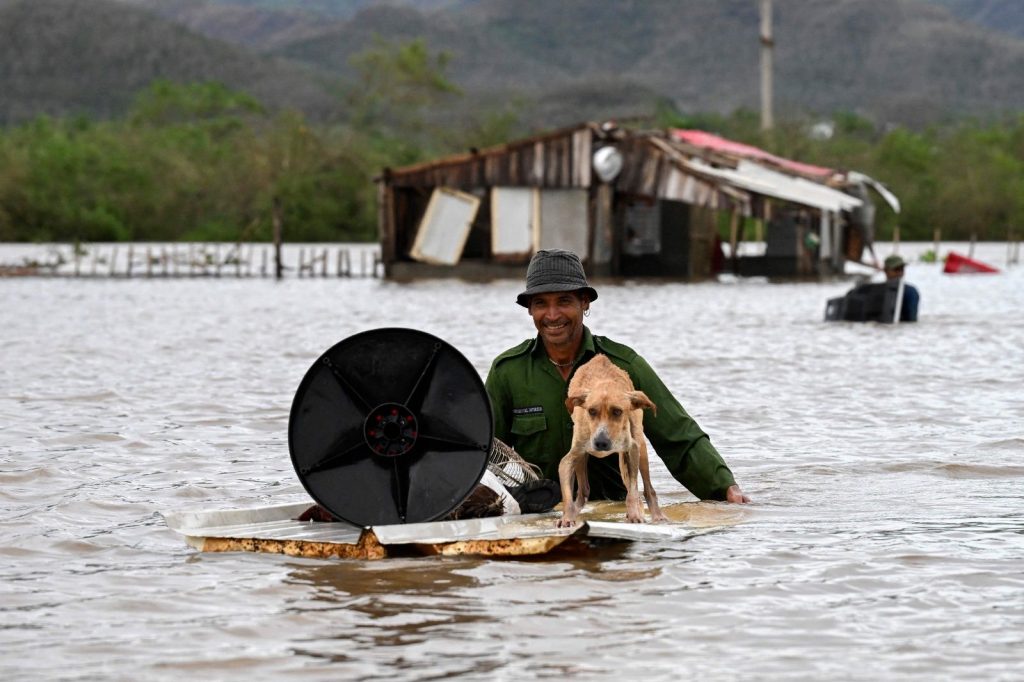
The Caribbean region as a whole is reeling from Hurricane Melissa’s destructive path. In the Dominican Republic, torrential rains flooded neighborhoods in Santo Domingo. A 79-year-old man was swept away by floodwaters, and a 13-year-old boy remains missing after being dragged out to sea.
In Haiti, at least three people were killed and hundreds of homes damaged. Nearby Cuba has closed schools in eastern provinces and prepared evacuation centers ahead of the storm’s expected landfall.
Forecasters warn Melissa could retain its strength as it moves northward, hitting southeastern Cuba on Tuesday night and the Bahamas by Wednesday. The NHC emphasized that such slow-moving Category 5 landfalls are “extremely rare.”
Satellite imagery shows Melissa’s massive eye, spanning over 50 kilometers, dominating much of the western Caribbean. “No one in Jamaica has experienced anything like this,” said meteorologist Matthew Cappucci.
The Organization of Eastern Caribbean States (OECS) has appealed for immediate international humanitarian aid. The United States has announced plans to deploy emergency response teams from Florida and Puerto Rico once conditions allow.
“This won’t be the last extreme weather event we face,” warned Anne-Claire Fontan of the WMO. “The Caribbean needs stronger early-warning systems and urgent adaptation strategies to withstand these new climate realities.”