Seychelles heads to the polls in decisive general elections
- September 26, 2025
- 0
This Saturday, Seychelles will hold presidential and legislative elections. Eight candidates compete for power in one of Africa’s most stable democracies.

This Saturday, Seychelles will hold presidential and legislative elections. Eight candidates compete for power in one of Africa’s most stable democracies.
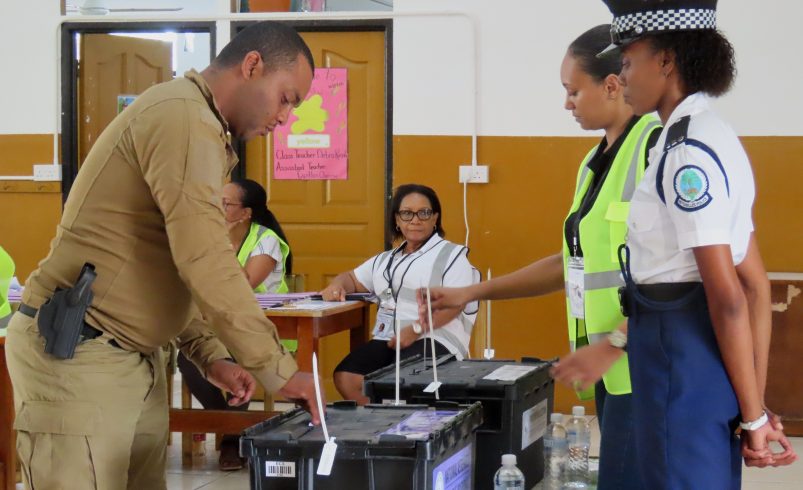
This Saturday, the Republic of Seychelles will vote in general elections to renew both the presidency and the National Assembly for the 2025-2030 term. The process is being closely monitored across the region, as the archipelago is often considered a democratic benchmark within Africa.
Seychelles is a presidential republic. The head of state, currently Wavel Ramkalawan, is elected by popular vote for a five-year mandate, with the possibility of one re-election.
If no candidate surpasses the 50% threshold, a runoff election will be held between the two most voted candidates.
The National Assembly is unicameral and consists of a maximum of 36 seats. Of these, 26 are directly elected in single-member constituencies corresponding to the country’s districts, while the remaining seats are allocated proportionally.
For every 10% of the national vote, a party receives an extra seat, up to ten additional seats.
This year, eight presidential candidates are in the race: five representing political parties and three independents. The wide range of contenders highlights the pluralism of the local political scene, where multiparty democracy has steadily consolidated in recent years.
Seychelles, an archipelago of more than 115 islands in the Indian Ocean with a population of around 100,000, is the smallest and least populated country in Africa. Yet it is also one of the richest and most developed, relying heavily on tourism, services, and financial activities.

Despite a history marked by coups and political turbulence, the country has significantly strengthened its rule of law.
Today, Seychelles stands out as one of the few African nations showing improvement in governance and civil liberties indexes, positioning itself as a rare example of stability in a region facing constant challenges.