Three 2024 biotechnology breakthroughs driven by AI and recognized with the Nobel Prize
- December 15, 2024
- 0
The 2024 Nobel Prize highlights how artificial intelligence is transforming biotechnology, enabling discoveries once thought impossible.

The 2024 Nobel Prize highlights how artificial intelligence is transforming biotechnology, enabling discoveries once thought impossible.

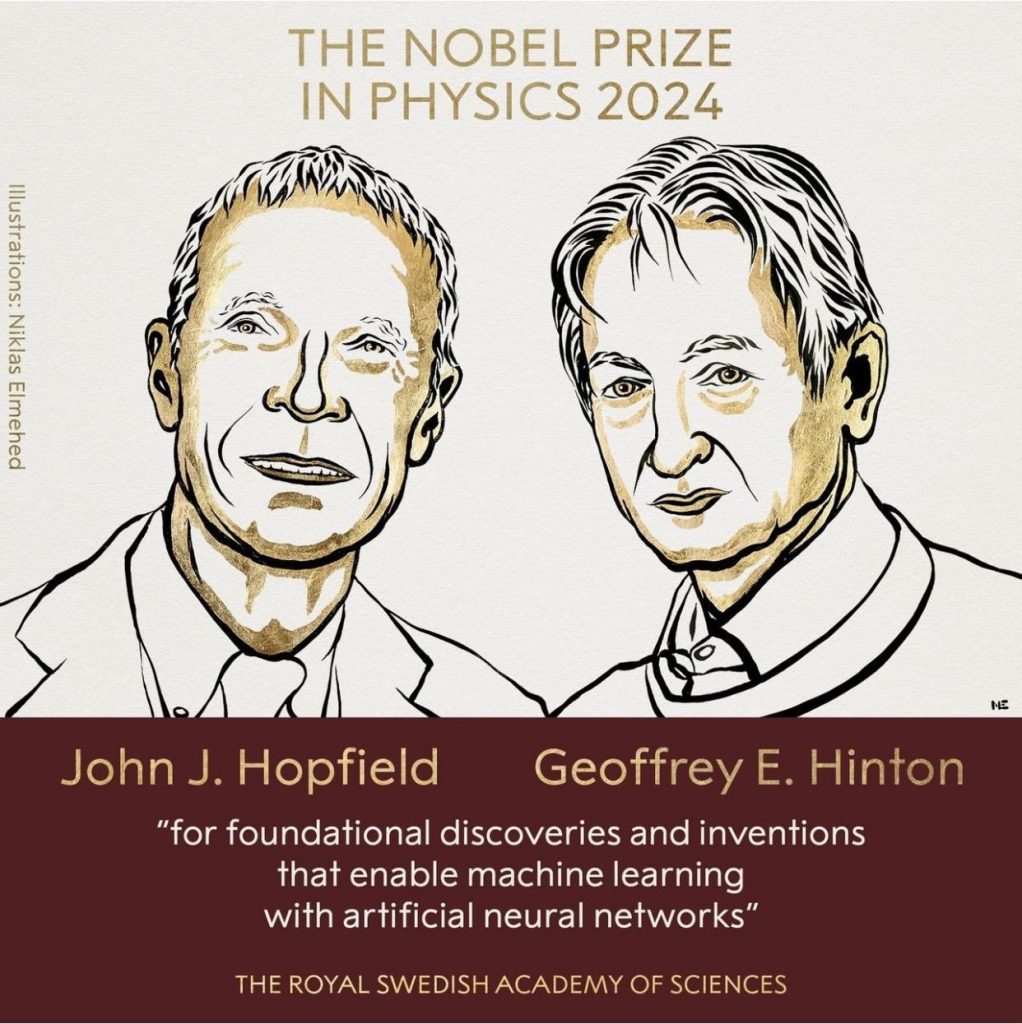
The 2024 Physics Nobel Prize, awarded to John Hopfield and Geoffrey Hinton for their work on neural networks, underscores the central role of artificial intelligence in modern science.
Beyond generating text or images, AI excels at analyzing massive datasets and extracting insights that would be impossible using traditional research methods.
A major 2024 milestone was the complete mapping of 140,000 neurons and over 50 million connections in the adult fruit fly brain, led by the FlyWire Consortium.
Using artificial intelligence, researchers reconstructed neurons in 3D from tomography images, reducing decades of work to months. This neural atlas allows prediction of neural activity and could eventually be extrapolated to human brains, offering hope for Alzheimer’s and other dementias.
In biotechnology, AlphaFold3 has revolutionized protein understanding. DeepMind’s AI predicts not only the 3D structure of all possible proteins but also their interactions with other proteins and substrates.
This 2024 breakthrough vastly expands our capacity to understand disease mechanisms, design enzymes for industrial use, and develop innovative therapies. The CASP competition confirmed AlphaFold3’s dominance in protein prediction, establishing it as central to modern molecular biology.
Another key discovery involved RNA viruses. An international team used an AI-based system called LucaProt to analyze 51 terabytes of genomic data, identifying 70,458 potential virus species, many previously unknown.
These insights are critical for monitoring emerging diseases and developing vaccines and treatments against rapidly mutating viruses like SARS-CoV-2, HIV, hepatitis C, and influenza viruses.
These three examples—the fruit fly neural map, AlphaFold3, and LucaProt—illustrate how artificial intelligence is increasingly embedded in biotechnology, transforming research in genetics, neuroscience, and virology.
This year’s Nobel Prize recognizes not only individual achievements but also AI’s ability to enhance human knowledge and open new scientific frontiers.
In 2024, countless research projects in biotechnology, genetics, nutrition, and physiology relied on AI to analyze massive datasets, generate precise predictions, and accelerate discoveries that would have otherwise taken decades.
The convergence of artificial intelligence and biotechnology marks the beginning of an era in which science can tackle complex problems with unprecedented speed and precision.