UN Warns of Surging Journalist Killings Amid Escalating Violence in Gaza
December 10, 2025
0
The UN reports a sharp rise in murdered journalists in 2025, nearly half in Gaza, where the war and intense military deployment have pushed press rights to the
The UN has issued a stark warning about the alarming rise in violence against journalists worldwide, highlighting 2025 as one of the deadliest years of the past decade.
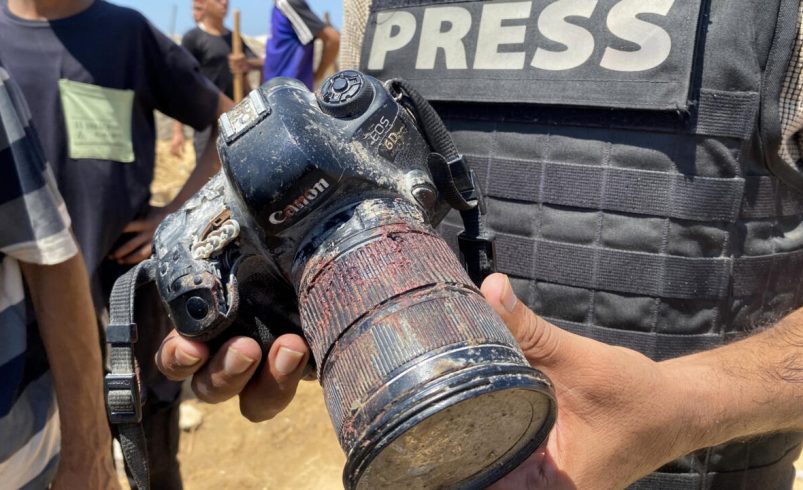
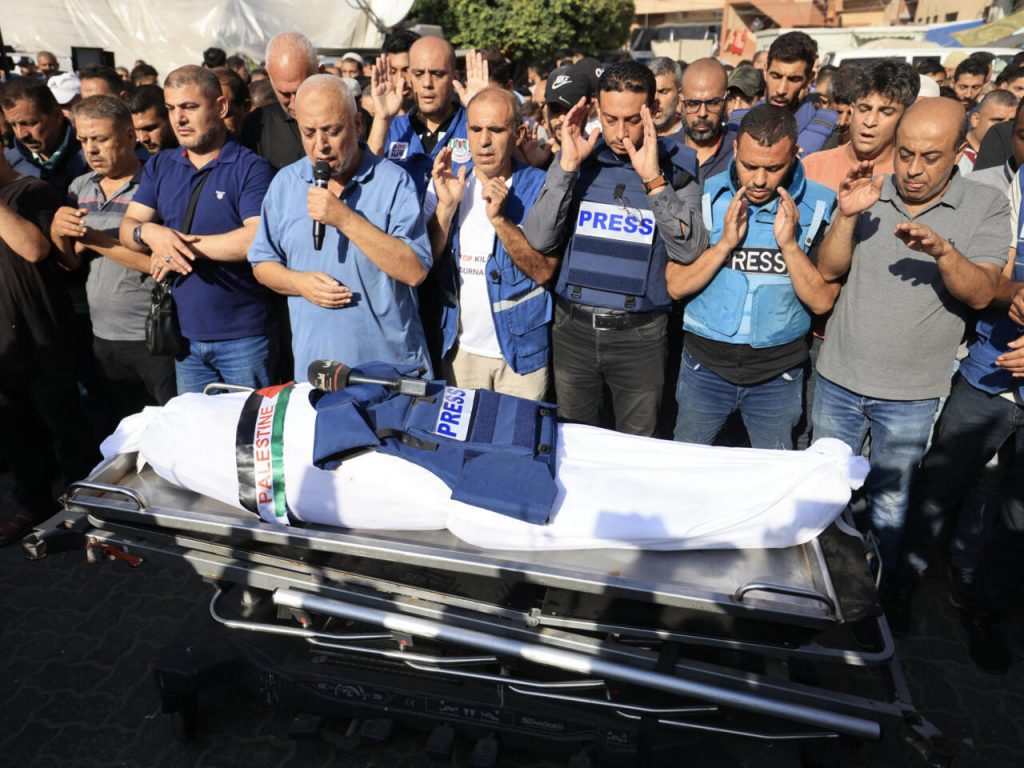
A new report from Reporters Without Borders (RSF), backed by UN-verified data, reveals that 67 media workers were killed over the past twelve months, nearly half of them in the Gaza Strip, where Israel’s ongoing military deployment has created one of the most dangerous environments for the press in modern history.
The findings underscore a deepening global crisis for press rights, particularly in regions overwhelmed by war, organized crime, and authoritarian repression.
BetweenDecember 1, 2024, and December 1, 2025, RSF documented the killings of 67 journalists — 64 men and 3 women — across 22 countries. A staggering 43% of these deaths occurred in Gaza, where Israeli Defense Forces have been repeatedly accused of targeting media workers.
RSF reports that since the start of the war on October 7, 2023, approximately 220 journalists have been killed in the Palestinian enclave. The organization describes Israel as “the worst enemy of journalists” in the territory, raising urgent questions about the obligations of states to protect the press during armed conflict, as outlined in international humanitarian law and the rights frameworks upheld by the UN.
Mexico emerged as the world’s second-deadliest country for the press, driven largely by the expanding influence of organized crime. In 2025, nine journalists — including community reporters and independent photographers — were murdered.
RSF warns that the violence in Mexico is now spilling over into neighboring nations in what it calls the “Mexicanization” of Latin America. When combined with killings in the Caribbean, the region accounted for 26% of all murdered journalists globally.
Influential war in Ukraine
Meanwhile, Ukraine continued to face devastating consequences from the Russian invasion. Three journalists were killed in 2025 in drone strikes attributed to Russian forces. RSF stresses that such attacks directly violate international law and reflect how conflict zones have become increasingly lethal for both local and international correspondents.
Sudanwas likewise identified as a growing hotspot for journalist deaths, fueled by escalating clashes between rival military factions.
These trends align with RSF’s latest list of global “press freedom predators,” topped by Russian President Vladimir Putin, the Israeli Armed Forces, Mexico’s Jalisco New Generation Cartel, Myanmar’s military junta, and Taliban leadership in Afghanistan.
The report also highlights a troubling rise in prison sentences targeting media workers. As of December 2025, 503 journalists remained behind bars in 47 countries. China leads with 121 imprisoned journalists, followed by Myanmar with 47 and Russia with 48.
Russia additionally holds the highest number of foreign journalists in detention, most of them Ukrainian. Israel, for its part, is detaining 20 Palestinian journalists, according to RSF and corroborated UN records.
Kidnappings pose another grave threat. RSF counts 20 journalists currently held hostage worldwide, all of them men. Yemen, Syria, and Mali are the primary centers of abductions.
In 2025 alone, Yemen’s Houthi rebels kidnapped seven additional journalists, making the country the global epicenter of media-related abductions. Syria remains plagued by unresolved disappearances, including cases of journalists who vanished more than a decade ago.
The number of missing journalists has also reached alarming levels. RSF reports 135 journalists as disappeared, including nine women.
Syria leads with 37 cases, followed by Mexico with 28 and Iraq with 12. Some journalists have been missing for more than 30 years, illustrating a persistent pattern of impunity that transcends political cycles and national borders.
Cases in Latin America
In Latin America and the Caribbean, 18 of the 67 journalists killed this year belonged to the region. Ecuador, Haiti, Peru, Colombia, Guatemala, and Honduras also witnessed fatal attacks against the press.
RSF criticizes the lack of progress in Mexico, where — despite public commitments from President Claudia Sheinbaum — violence against reporters has not decreased.
Repression intensified in Ecuador as well, where at least 55 journalists were assaulted while covering protests over diesel price hikes. In El Salvador, RSF denounces what it calls a “forced exile” of independent journalists due to increasing hostility under President Nayib Bukele.
The report ends with a grave warning: journalism is facing one of its most dangerous eras in decades. Conflict, criminal networks, and state repression are eroding global press rights at an unprecedented pace.
For the UN, the situation in Gaza represents the darkest example of this trend — a powerful reminder of the fragility of journalism in an era marked by pervasive violence and diminishing accountability.