Brazil convenes world leaders in Belém to revive global climate action
- November 6, 2025
- 0
Nearly 50 heads of state and government are gathering this Thursday in Belém, in Brazil, to renew the international commitment to fight climate change.

Nearly 50 heads of state and government are gathering this Thursday in Belém, in Brazil, to renew the international commitment to fight climate change.
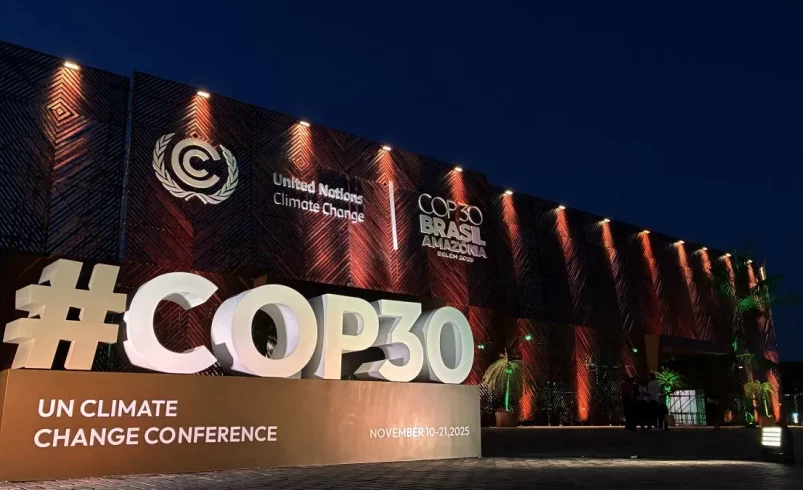
The meeting, held ahead of the COP30 climate summit, is overshadowed by the absence of the United States and mounting pressure to turn words into action.
Among the attendees are UK Prime Minister Keir Starmer and French President Emmanuel Macron, while China and India sent lower-level envoys. Washington, however, opted out entirely.
President Donald Trump once dismissed climate science as “a hoax,” highlighting U.S. disengagement from global environmental policy.
The choice of Belém—a city of 1.4 million, half of whom live in working-class neighborhoods—sparked controversy due to its limited infrastructure. High hotel prices and unfinished construction have complicated the arrival of delegations and NGOs.
😳III Guerra Mundial? Durante a #COP30 o presidente Lula foi flagrado encantando o príncipe William e o primeiro-ministro britânico, Keir Starmer. A cena gerou indignação de líderes como Putin, Xi Jinping, Macron e Trump que ficaram enciumados, segundo eles: Lula é só deles.… pic.twitter.com/XPivOZZbrN
— PLOCSOCIAL (@plocsocial) November 6, 2025
“The COP is finally giving Belém the recognition it deserves,” said Karol Farias, a local makeup artist, at the renovated Ver-o-Peso market.
Brazil hopes the gathering will reaffirm global determination to address the climate crisis, even if it doesn’t yield concrete agreements. Still, contradictions abound: the government’s decision to allow new oil drilling near the Amazon River mouth has drawn criticism.
UN Secretary-General António Guterres warned that the goal of keeping global warming below 1.5°C above pre-industrial levels is now “out of reach.” Despite that, Brazil seeks to position itself as a mediator and climate action leader heading into COP30 in 2026.
Logistical challenges persist, with some delegations still struggling to find accommodations. The COP30 presidency announced free lodging on three ships for low-income countries, funded by international partners.
Globally, cooperation is faltering amid wars, trade disputes, and rising anti-green populism. Last month, a proposal to curb shipping emissions collapsed under U.S. pressure.
“Leaders must give the COP a clear mandate to be ambitious and close the gaps,” said Carolina Pasquali, executive director of Greenpeace Brazil, speaking from the Rainbow Warrior docked in Belém. “Time is running out, and promises don’t save lives,” she added.
President Luiz Inácio Lula da Silva urged the summit to focus on implementation. “Enough talk—we need to act on what we’ve already agreed,” he said. Lula is advocating for a global fund to reward tropical nations for preserving their forests and for prioritizing climate change adaptation.
“This is not charity—it’s necessity,” said Evans Njewa, a diplomat from Malawi and chair of the Least Developed Countries bloc, demanding a scale-up of climate finance to $1.3 trillion annually by 2035.
Even if current commitments are met, global temperatures could rise 2.5°C by the end of the century, according to projections. “For many of our countries, we cannot adapt beyond two degrees,” warned Ilana Seid of Palau, chair of the Alliance of Small Island States.
Despite divisions, Lula aims to introduce a “roadmap to reduce fossil fuel use.” “It’s a difficult conversation, but it must happen,” he said. In an era of unfulfilled promises and rising distrust, the Belém summit seeks to rekindle global commitment to the environment.
The challenge lies in transforming declarations into concrete actions that halt climate change and preserve the planet for future generations.