France Hardens Its Stance and Puts the EU–Mercosur Agreement in Doubt
- November 16, 2025
- 0
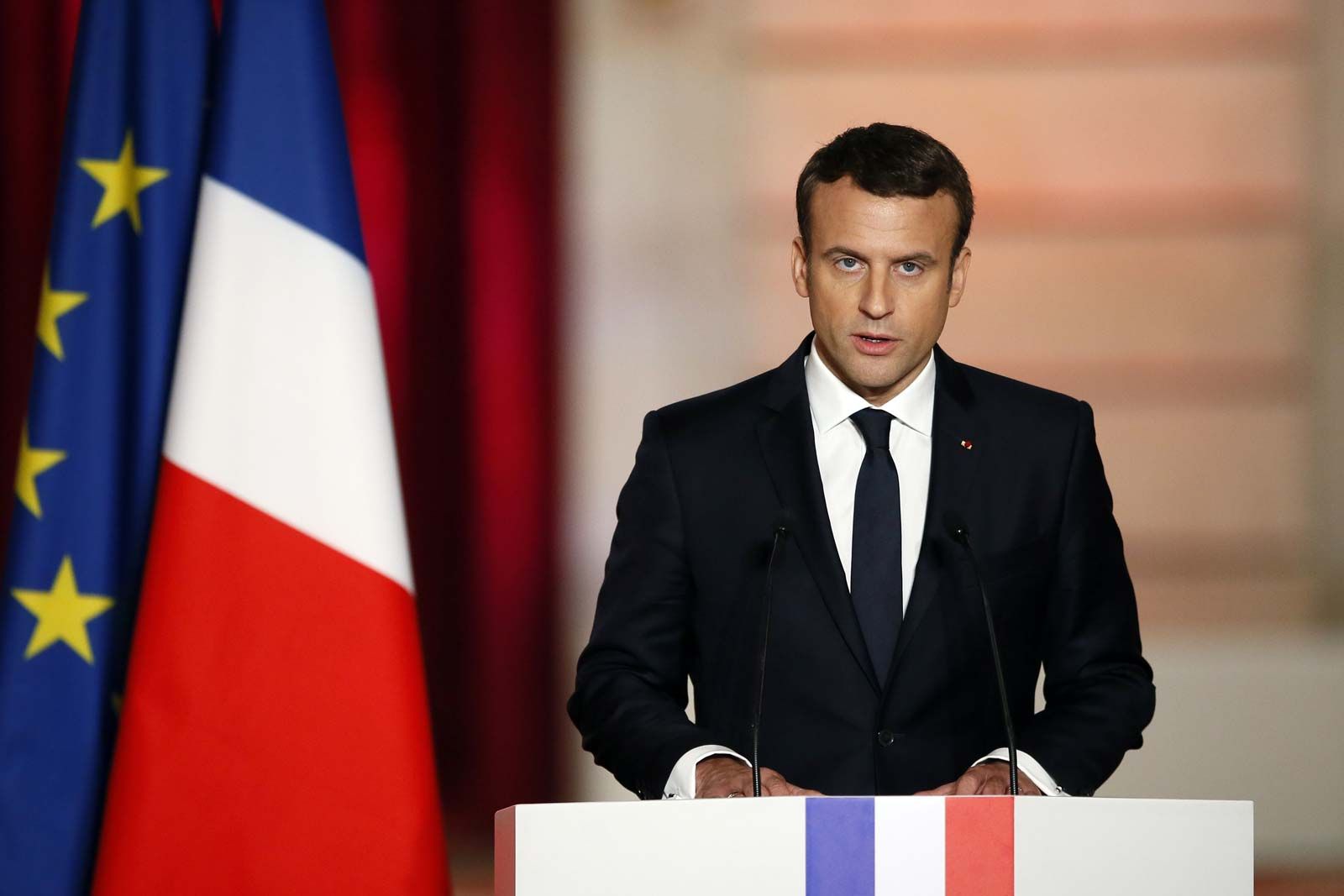
President Macron reaffirmed France’s rejection of the EU–Mercosur trade deal, arguing that it lacks sufficient safeguards for the agricultural sector.

President Macron reaffirmed France’s rejection of the EU–Mercosur trade deal, arguing that it lacks sufficient safeguards for the agricultural sector.
President Emmanuel Macron has once again intensified the debate within France and the broader European Union, confirming that his government will not support the EU–Mercosur agreement in its current form.
During a meeting with farmers in Toulouse, the French leader stated that the treaty would receive “a resounding no.” Agriculture Minister Annie Genevard echoed this position, insisting that France will not approve the deal without adding robust safeguard clauses and monitoring mechanisms.
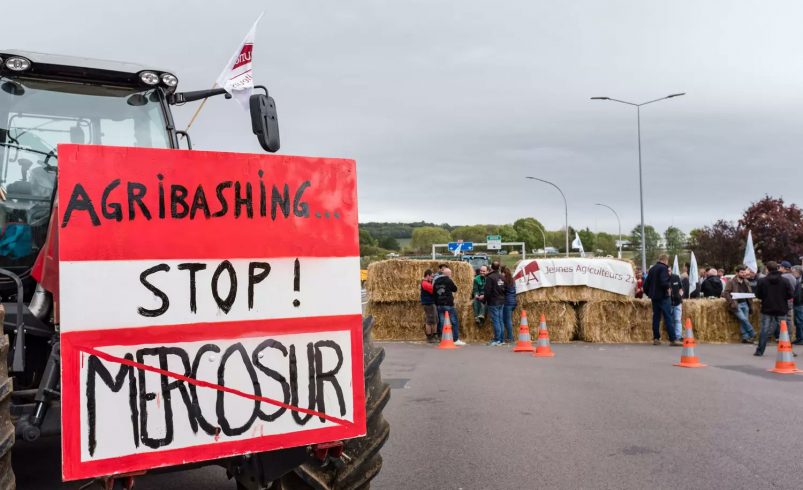
Roughly 300 agricultural workers arrived in Toulouse with tractors to protest as Macron participated in a forum on social media and democracy.
Their mobilization followed comments the president made in Brazil during COP30, suggesting a degree of “cautious optimism” about the approval of the agreement—a statement that triggered strong pushback from the agricultural sector.
Genevard clarified that the current draft “does not protect the interests of our farmers.” She emphasized that France cannot endorse any deal lacking “solid safeguard clauses, mirror measures, and strict border controls.”
These requirements aim to prevent imported goods from entering the European market with weaker environmental, labor, or sanitary standards than those imposed on EU producers.

“We cannot accept products that fail to comply with the rules we impose on our own farmers,” the minister stated.
She reiterated that France will remain firm in its demand for “mirror clauses,” which would obligate Mercosur countries—Brazil, Argentina, Paraguay and Uruguay—to adhere to standards comparable to those in the European Union.
During his meeting with farmers, Macron reaffirmed that his government “will remain vigilant” as negotiations continue in Brussels. Speaking from Mexico, where he was on an official visit, the president stressed that France still expects clear guarantees before offering definitive support for the agreement.
The trade deal, adopted by the European Commission in September 2025, must still be ratified by all 27 EU member states. France, one of the most vocal critics, has become the central obstacle, though Italy and Poland have also expressed concerns related to agricultural competitiveness and environmental impact.
To block the agreement, Paris would need to form a “blocking minority” with at least three other countries representing a combined 35% of the EU population—a scenario that now appears within reach.
The European Commission, led by Ursula von der Leyen, hopes to complete ratification before the end of 2025, when Brazil hands over the Mercosur presidency.
Yet internal divisions within Europe and mounting pressure from farmers continue to threaten the timetable. As disagreements deepen, uncertainty looms over the future of a deal considered one of the most expansive and strategic in EU trade policy.