U.S. and Israel strike Iran: Netanyahu praises Trump
- June 22, 2025
- 0
U.S and Israel launch attacks on Iranian nuclear facilities, while Netanyahu praises Trump and Tehran threatens retaliation, raising tensions across the Middle East.

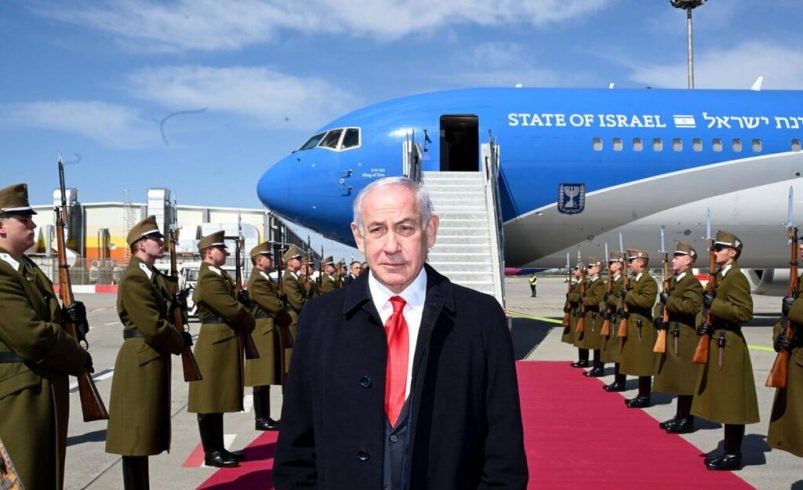
When Netanyahu took the podium at the Israeli Prime Minister’s office this Sunday morning, he did not first address the Israeli public in Hebrew to report on the latest dramatic developments in the ongoing war.
Instead, he spoke in English, directly addressing President Donald Trump and praising him following United States airstrikes on Iran’s nuclear facilities.
If Netanyahu’s tone was triumphant, with a barely restrained smile, it comes as no surprise. He has spent most of his political career focused on the threat he perceives Iran poses to Israel.
For the past 15 years, Netanyahu has tried to convince his U.S. allies that only military action—and specifically U.S. munitions—could destroy Iran’s nuclear weapons program.
🇺🇸 🇮🇱 President Trump praises Benjamin Netanyahu:
— Vivid.🇮🇱 (@VividProwess) June 26, 2025
"Bibi and I just went through hell together, fighting a very tough enemy of Israel. Bibi could not have been stronger in his love for the Holy Land. Bibi Netanyahu was a warrior unlike any other warrior in the history of Israel." pic.twitter.com/7c8dWtp8Ge
By commending Trump for a bold decision that “will change history,” Netanyahu also achieved a personal victory, influencing a U.S. president who campaigned against foreign military interventions and whose base largely opposed joining Israel in a war against Iran.
It is important to note that Trump’s intelligence agencies did not share Israel’s assessment of how quickly Iran could develop a nuclear weapon, nor whether it had decided to do so.
However, it was no secret that only United States possesses the heavy firepower capable of overcoming the highly fortified Iranian nuclear sites, particularly at Fordo, built inside a mountain.
Without U.S. support, Israel would have continued targeting objectives on its list, striking the Iranian military, commanders, nuclear scientists, government infrastructure, and nuclear program components accessible to its air force.
However, Netanyahu may have been deprived of the opportunity to claim the nuclear threat has been fully neutralized. Only a regime change in Iran could have created that possibility. B2 bombers have undoubtedly shifted the course of the war, but future intensity will depend on the response of Iran and its allies.
Last week, Iran’s Supreme Leader threatened retaliation against United States in case of conflict. “Americans must know that any U.S. military intervention will cause irreparable damage,” declared Ayatollah Ali Khamenei.

On Saturday, Yemen’s Houthi rebels, allies of Iran, threatened to attack U.S. ships in the Red Sea if United States intervened. U.S. military personnel, businesses, and citizens in the region are now potential targets. Iran could respond by striking U.S. bases or warships, potentially disrupting oil flows and driving up gasoline prices.
United States has indicated that its military action is complete for now and that it does not seek to overthrow Tehran’s government. This could encourage Iran to limit its response, perhaps targeting U.S. assets with minimal casualties or using regional allies to do so.
The same approach was followed by Iran after Trump ordered the killing of IRGC leader Qasem Soleimani in 2020. On Saturday night, Trump reiterated his threat to use overwhelming force to counter any retaliation from Iran.
This Sunday, the entire Middle East holds its breath, waiting to see whether this attack marks the beginning of the end of the conflict or the start of an even deadlier phase of war.