Israel bombards Hamas leaders in Doha, Straining Qatar’s Mediation in Gaza
- September 9, 2025
- 0
The Israeli attack in Qatar on senior Hamas officials threatens to derail peace talks in Gaza and leaves the United States in a delicate position.

The Israeli attack in Qatar on senior Hamas officials threatens to derail peace talks in Gaza and leaves the United States in a delicate position.
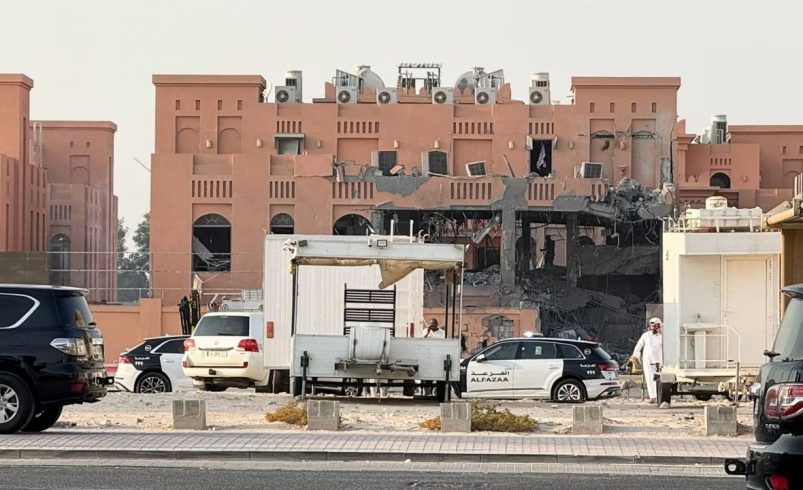
On Tuesday night, Israel shocked the world with an unprecedented strike, launching missiles at the capital of Qatar, where top Hamas leaders were based. The operation, called “Summit of Fire,” targeted the political bureau of the Islamist group, which has used Doha as a diplomatic hub for over a decade.
The attack, officially confirmed by Tel Aviv, has triggered a diplomatic storm, putting the ceasefire negotiations in Gaza at risk and challenging the role of one of United States’ most strategic Middle Eastern allies.
According to Hamas sources, six people were killed in the strikes, including five members of the movement, among them the son of chief negotiator Khalil Al-Hayya and the director of his office. A Qatari security officer also died. However, the main target, Al-Hayya, survived.
⚡️🇶🇦🇮🇱BREAKING:
— Suppressed News. (@SuppressedNws) September 9, 2025
Israel attacked the Hamas delegation in Katara neighborhood in Doha, Qatar, during a meeting on the latest U.S. proposal, causing massive explosions. The Israeli army confirmed using fighter jets for the strike and Israeli Channel 12 reported the strike was… pic.twitter.com/2BK94lg8Ms
Despite the scale of the operation, the negotiating delegation was not wiped out, leaving the talks technically ongoing, but under extreme tension.
The explosions hit the West Bay Lagoon neighborhood, an upscale residential area in Doha where Hamas representatives were staying. The Qatari government immediately condemned the action as an “act of state terrorism” and denied having received any prior warning from Tel Aviv.
Prime Minister Sheikh Mohammed bin Abdulrahman Al-Thani stated that the strike “violates not only international law but also basic moral standards.”
This marks the first time Israel has openly targeted the territory of a Gulf Arab state, signaling a major shift in its military strategy. International analysts say the offensive sends a dual message: demonstrating Israel’s willingness to strike even protected territories, while putting at risk one of the few diplomatic channels that still provides a fragile bridge between the parties in Gaza.
For years, Qatar has been a strategically neutral ground. It has hosted secret talks with international actors, including the Taliban, and maintains direct communication with United States, Israel, and Hamas.
The country also hosts the largest U.S. military base in the Middle East, making the Israeli strike a particularly sensitive signal for Washington.
The White House quickly sought to distance itself from the attack. President Donald Trump said he was “not thrilled with the whole situation” and admitted he learned of the operation only minutes before it occurred, through the Joint Chiefs of Staff rather than from the Israeli government.
For Palestinians, the offensive coincided with a new order for a full evacuation of Gaza City, where nearly a million people are already suffering from hunger and forced displacement. Humanitarian organizations warn that the intensification of Israel’s military actions could worsen an already dire situation, leaving thousands of civilians trapped under extreme conditions.
Canada, Germany, and Poland also expressed concern over the escalation. In contrast, from Jerusalem, Prime Minister Benjamin Netanyahu defended the attack as “a necessary step to open the door to peace and end the war in Gaza.”
The political impact goes beyond the capitals involved. The United Nations, the European Union, and several Arab countries condemned the strike. Secretary-General António Guterres warned of “serious violations of international law and risks to regional stability.”
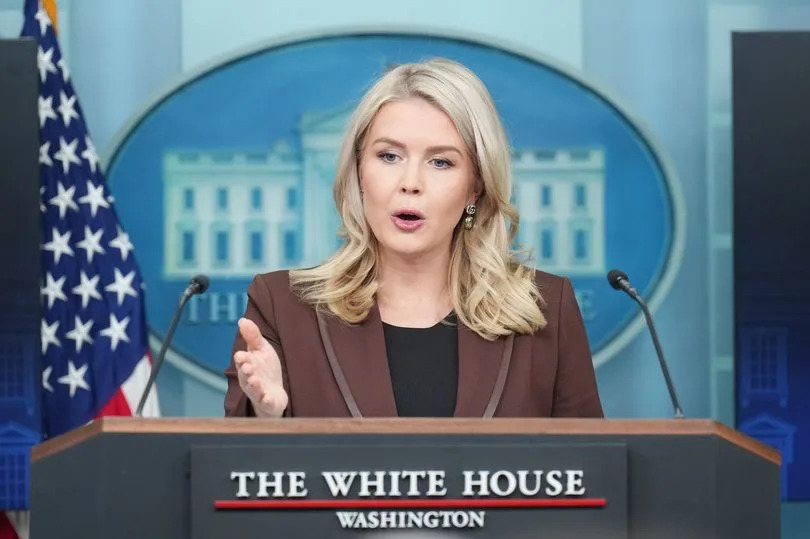
His spokesperson, Karoline Leavitt, warned that “striking inside Qatar does not advance the objectives of Israel or the United States.” Yet Trump stopped short of explicitly condemning Netanyahu, reflecting the delicate balance Washington faces between two key allies in a highly volatile scenario.
In Doha, Qatari diplomats fear the attack was intended to undermine the peace talks. “The strike was clearly designed to sabotage the mediation,” said Hamad Al-Muftah, a senior foreign ministry official. Still, Emir Al-Thani insisted that Qatar will not abandon its role as a mediator, though he acknowledged that the current dialogue rounds are “at risk of collapse.”
The Israeli attack also alarms families of hostages in Israel, who fear it may delay a deal to release captives held by Hamas in Gaza. One mother of a hostage said the offensive “amounts to a death sentence for our children.”