Taiwan Announces Massive Military Budget to Counter Growing Chinese Threat
November 26, 2025
0
Taiwan will add $40 billion to its defense budget to respond to China’s expanding military deployment, signaling a strong stance on sovereignty and security.
Taiwan has announced an extraordinary $40 billion supplemental defense budget, marking one of the largest military expansions in its modern history. The move aims to counter the increasing pressure of China, whose growing military deployment around the island has escalated regional tensions.
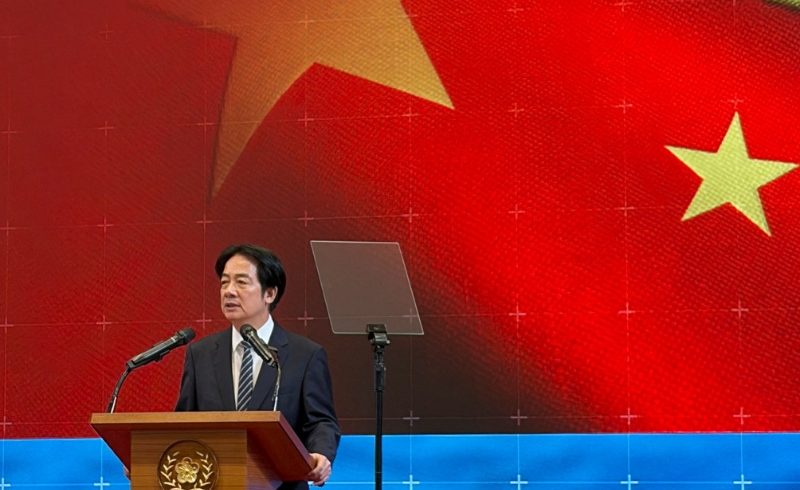
President Lai Ching-te emphasized that the new investment demonstrates Taiwan’s unshakable determination to defend its sovereignty.
Over the past five years, China has intensified military drills, aerial incursions and naval operations near Taiwan, which Beijing claims as part of its territory. Taiwan firmly rejects these claims. Facing this escalating threat, Lai’s government has repeatedly argued that the country must significantly strengthen its defense capabilities.
The president warned that history has shown time and again that “appeasement only leads to the loss of freedom.” Speaking at the Presidential Office, he stated that national security is non-negotiable: “Our national sovereignty and the core values of freedom and democracy are the foundation of our country.”
The supplemental budget —totaling 1.25 trillion New Taiwan dollars, or roughly $39.89 billion— will cover 2026 to 2033.
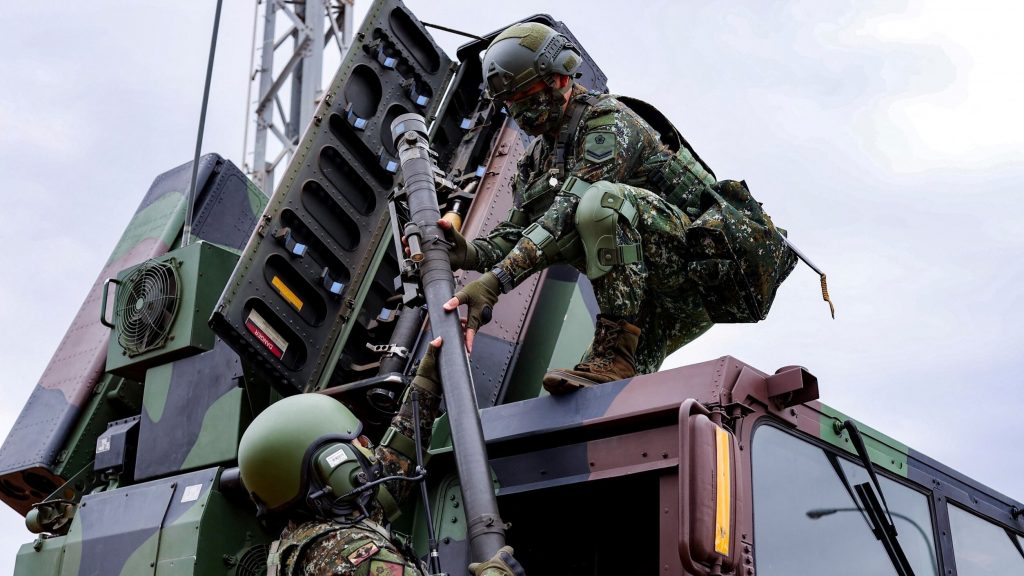
Defense Minister Wellington Koosaid the funds will support the development and acquisition of missiles, drones, surveillance systems, air-defense capabilities and the new T-Dome system designed to detect and intercept aerial and naval threats.
Lai first outlined the plan in an opinion piece in The Washington Post, where he reiterated Taiwan’s determination to defend itself. “This is not merely an ideological battle. It is a confrontation between protecting democratic Taiwan and refusing to become ‘China’s Taiwan,’” he wrote.
Taiwan has followed suit: Lai announced his intention to raise defense spending to 5% of GDP by 2030. By 2026, investment is expected to reach NT$949.5 billion ($30.3 billion), or 3.32% of GDP —the highest level since 2009.
The budget still requires approval from Taiwan’s opposition-controlled legislature. The Kuomintang (KMT), the island’s main opposition party, has expressed skepticism toward increased military spending.
KMT chair Cheng Li-wun did not confirm whether the party would vote against the proposal but urged President Lai to “step back from the brink.” She added that Taiwan’s citizens “deeply desire peace and wish to avoid war at all costs.”
Japan in Taiwan’s sights
Japanese Prime Minister Sanae Takaichi recently suggested that a Chinese attack on Taiwan could trigger a Japanese military response. When asked about these remarks, Lai criticized China, saying that its behavior does not reflect that of a “responsible global power.”
In Beijing, Taiwan Affairs Office spokesperson Peng Qingen accused Taiwan of allowing “external forces” —a reference to the United States— to shape its decisions.
He argued that money spent on weapons should instead be used to improve Taiwanese livelihoods, claiming that the island is being driven “toward disaster.”
Taiwan rejects these arguments. Lai insists that only the people of Taiwan have the right to decide their country’s future. Beijing has refused every offer of dialogue from Lai’s administration, labeling him a “separatist” and accusing him of escalating tensions.
Lai reiterated that Taiwan’s relationship with the United States remains “rock-solid,” even as President Trump prepares for an upcoming visit to China amid improving trade ties between Washington and Beijing. According to Lai, Trump recently emphasized that “Taiwan is Taiwan” and expressed personal respect for the island —comments that Lai said “speak for themselves.”
The president concluded that while Taiwan hopes for stability, it must remain vigilant: only a strong defense can deter aggression and ensure that the island’s democratic way of life endures.