United States reinforces its polar presence with historic icebreaker rescue in Antarctica
- January 28, 2026
- 0
The U.S. Coast Guard freed a cruise ship trapped in Antarctica, highlighting the United States’ strategic reach in polar regions.

The U.S. Coast Guard freed a cruise ship trapped in Antarctica, highlighting the United States’ strategic reach in polar regions.

Ice leaves little room for mistakes, even during the Antarctic summer. In that unforgiving environment, the U.S. Coast Guard once again demonstrated its operational strength by rescuing the Scenic Eclipse II, an Australian luxury cruise ship trapped in dense ice near McMurdo Sound, in Antarctica.
The operation was carried out by the Polar Star, the United States’ oldest heavy icebreaker, which had just begun its annual deployment to the southern continent as it marked its 50th year in service.
Far from a symbolic voyage, the ship was called into action before reaching its primary area of operations.
The incident occurred late Friday night in the Southern Ocean, when the Scenic Eclipse II became immobilized by thick ice floes that overwhelmed its reinforced hull and propulsion systems.
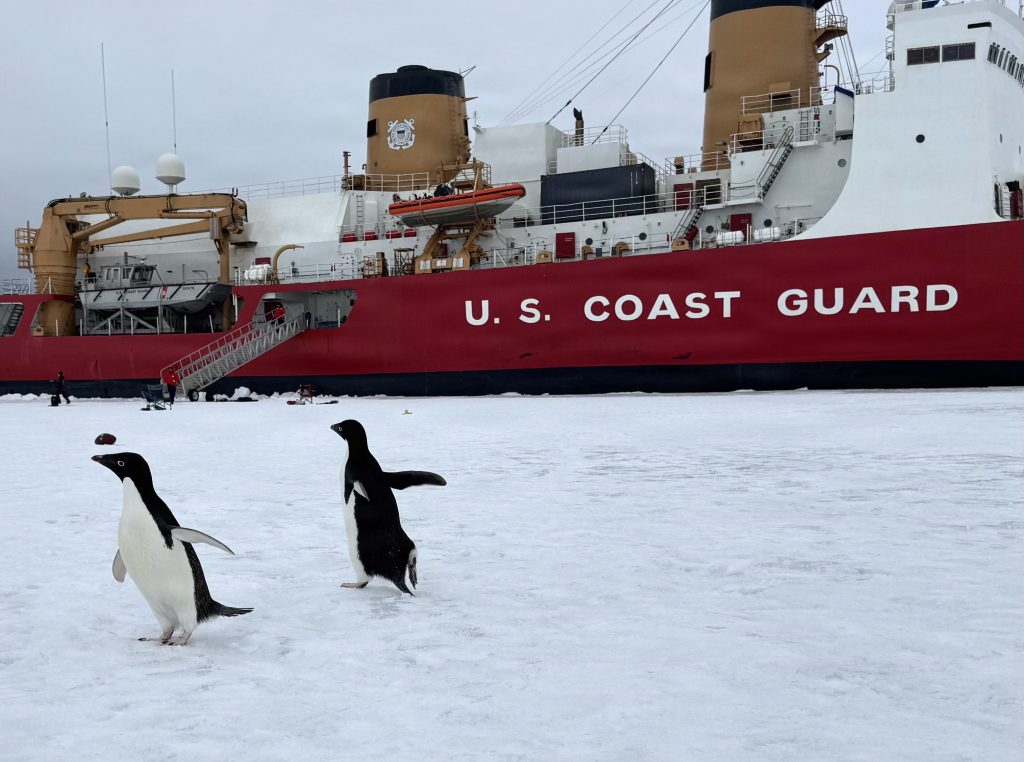
Unable to maneuver, the cruise ship issued a distress call that was received by the Polar Star, already operating in the region as part of Operation Deep Freeze 2026.
At approximately 11 p.m., the U.S. icebreaker approached the area and executed two carefully measured maneuvers, cutting a narrow but safe path through the ice.
The operation successfully freed the cruise ship, which was then escorted for about four nautical miles into more open waters, where conditions were significantly safer. No injuries were reported.
Rescue marked the first operational mission of Operation Deep Freeze 2026, a long-running logistical campaign that underpins the United States’ scientific and strategic presence in Antarctica.
Operation supports research stations through a complex network of airlifts, maritime supply routes, medical evacuations and emergency responses.
Polar Star plays a crucial role in this effort. Its primary task is to carve navigable channels through kilometers of compacted ice, enabling cargo vessels to deliver fuel, food and scientific equipment. At present, it is the only heavy icebreaker in active service for the United States, making it an indispensable asset for polar operations.
Commissioned on January 17, 1976, the Polar Star has served in both the Arctic and Antarctica, supporting missions ranging from national defense and environmental protection to search-and-rescue operations in extreme conditions.
The U.S. Coast Guard cutter Polar Star rescued the cruise ship Scenic Eclipse II from the ice in Antarctica on Saturday. pic.twitter.com/OvPZUWzIab
— NTD News (@NTDNews) January 30, 2026
Its continued service highlights both its durability and the limited size of the U.S. icebreaker fleet.
“I am constantly impressed by the energy and enthusiasm of this crew,” said Captain Jeff Rasnake, commanding officer of the Polar Star, emphasizing their commitment to keeping the aging vessel mission-ready.
According to Coast Guard leadership, the ship’s relevance has not diminished with age. “At 50 years old, the Polar Star remains the most capable non-nuclear icebreaker in the world,” said Commander Samuel Blase, the ship’s executive officer, crediting decades of maintenance and highly trained crews.
As geopolitical interest in polar regions intensifies, the successful rescue of the Scenic Eclipse II underscores how the United States continues to project operational capability and strategic presence in Antarctica, even through a vessel that has been breaking ice for half a century.