Amsterdam bans meat and fossil fuel advertising in public spaces over climate concerns
- February 6, 2026
- 0
Amsterdam, in the Netherlands, will ban public advertising of meat and other high-emission products starting in May.

Amsterdam, in the Netherlands, will ban public advertising of meat and other high-emission products starting in May.
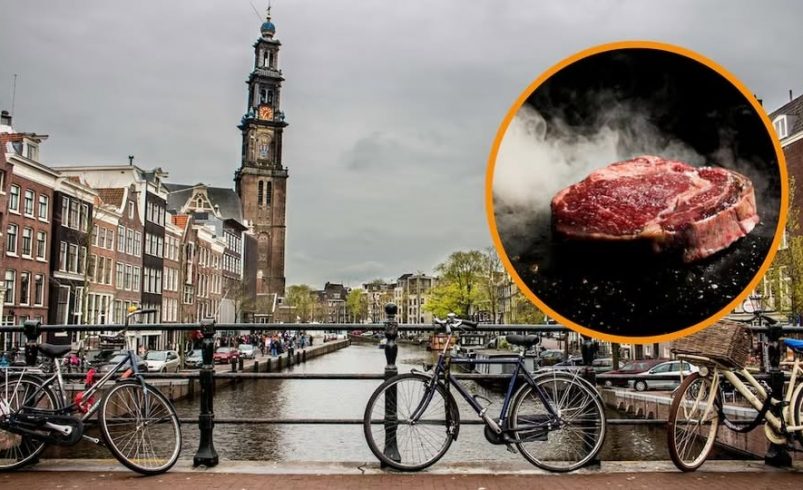
Amsterdam is set to become the first capital city in the world to comprehensively ban advertising for products deemed to have a high climate impact in public spaces.
Starting on May 1, the city in the Netherlands will prohibit the promotion of meat and fossil fuel–related activities on billboards, bus shelters, digital screens and advertising media in streets and public transport.
The measure, promoted by the GreenLeft party (GroenLinks) and the Party for the Animals (PvdD), was approved by a majority in the municipal council and is part of a broader strategy aimed at reducing the city’s carbon footprint.
City officials said the goal is to prevent public authorities from undermining their own climate policies by allowing advertising that encourages activities proven to contribute to climate change.
Until now, Amsterdam had applied partial restrictions through contracts with outdoor advertising companies, resulting in uneven rules depending on contract timelines.
With the adoption of a municipal ordinance, the ban now has full legal force and applies uniformly across all public spaces, closing regulatory gaps.
A key element of the regulation is that it does not ban the sale or consumption of meat, nor advertising in general.
The restriction applies solely to mass promotion in shared public areas. Meat products may still be advertised inside the premises where they are sold, such as butcher shops and supermarkets, through shop windows or signage located immediately next to the store.
Municipal authorities stressed that these exceptions are designed to avoid being “unnecessarily restrictive” and to make clear that the policy is not intended to punish consumers or businesses, but rather to reduce the normalization of high-emission consumption in publicly regulated spaces.
Scientific evidence underpins the decision. International organizations such as the United Nations warn that animal-based foods are associated with significantly higher greenhouse gas emissions compared with plant-based alternatives, which generally require less land, water and energy. In this context, Amsterdam aims to encourage a gradual shift in dietary habits.
The policy aligns with national targets in the Netherlands, which aim for 50% of protein consumption to come from plant-based sources by 2050. Currently, animal proteins still dominate the average diet, and city officials view advertising restrictions as a complementary tool to support the transition.
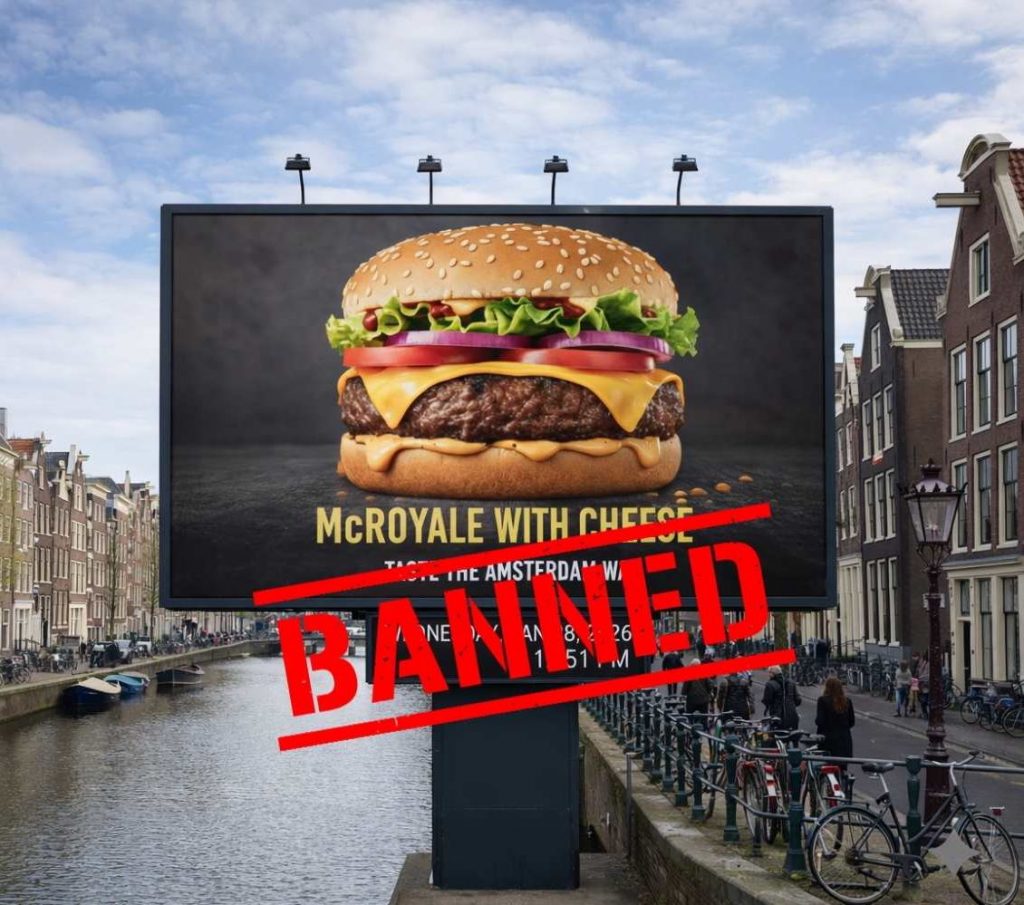
The initiative has sparked political debate. Parties such as the liberal D66 and the conservative VVD opposed the measure, arguing it could impose additional burdens on businesses and set a precedent for excessive government intervention.
Supporters rejected those claims, saying the regulation was carefully crafted to protect local commerce and individual freedoms.
At the national level, no government veto is expected for now, but Amsterdam’s decision has reignited discussion about the role of cities in climate action and could inspire similar policies across Europe.
The Netherlands is an important market for Argentina, a major exporter of beef. According to official data, Argentina exported US$199 million worth of goods to the Netherlands in December 2025 and imported US$38.2 million, resulting in a US$161 million trade surplus.
Beef meat was among the leading exports, with sales totaling US$22.8 million, alongside rapeseed and groundnuts. While the new regulation does not prohibit meat imports or sales, analysts warn that limiting advertising visibility could influence consumption patterns over the medium term and affect demand.