Brazil deploys its deadliest operation in Rio de Janeiro against drug trafficking
- October 29, 2025
- 0
A historic operation in Brazil left at least 64 dead and 81 arrested in Rio de Janeiro, marking an unprecedented offensive against drug trafficking.

A historic operation in Brazil left at least 64 dead and 81 arrested in Rio de Janeiro, marking an unprecedented offensive against drug trafficking.
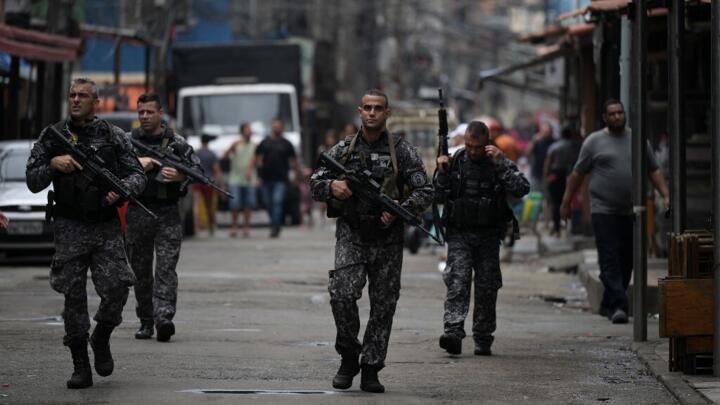
Government of Brazil carried out on Tuesday the largest police operation in recent decades in Rio de Janeiro, aiming to dismantle the criminal group Comando Vermelho.
The joint action, led by civil and military forces, left at least 64 people dead and 81 arrested, in what authorities described as an “unprecedented operation” against drug trafficking.
Operation involved nearly 2,500 security officers, helicopters, armored vehicles, and tactical units that entered the Alemão and Penha complexes, two neighborhoods historically dominated by the Comando Vermelho. According to official sources, four of the dead were police officers, and several residents were injured amid hours-long shootouts.
Rio de Janeiro’s governor, Cláudio Castro, a political ally of former president Jair Bolsonaro, described the operation as “the largest in the history of the state’s security forces.” He said it began “after more than a year of investigation and over sixty days of detailed planning.”

“This is a state operation against narco-terrorists, because those who do what they do are narco-terrorists,” Castro declared. At a press conference, he presented the seized material: 31 rifles, large quantities of drugs, ammunition, and communications equipment.
He also confirmed the arrest of several leaders of the Comando Vermelho, including Thiago do Nascimento Mendes, known as Belão, and Nicolas Fernandes Soares, alleged financial operator of the organization.
The operation is part of a state policy to curb the territorial expansion of the Comando Vermelho, one of Brazil’s most powerful and oldest criminal networks. Born in Rio de Janeiro’s prisons during the 1970s.
Tuesday’s clashes were among the most violent in years. Witnesses reported that traffickers fired heavy weapons, blocked major roads like Avenida Brasil, and used drones to drop explosives on police units. In response, authorities deployed every available battalion and suspended administrative duties within the Military Police.
The aftermath was grim. Local media showed burnt vehicles, barricades, and families fleeing combat zones. Schools and health centers were closed. “It was like a war,” said a resident of Penha. “We couldn’t leave the house — it was gunfire and helicopters all day.”
Governor Castro praised the operation’s success and emphasized the use of “technology, strategy, and intelligence,” while lamenting the lack of federal assistance. “Our police are alone. We have no support from federal armored units or defense forces. Rio de Janeiro faces this battle completely on its own,” he said.
Brazil’s Justice Ministry responded that the federal security plan, active since 2023, remains in place and that every state request for National Force support has been granted. Still, the political rift between federal and state authorities resurfaced in the midst of the crisis.
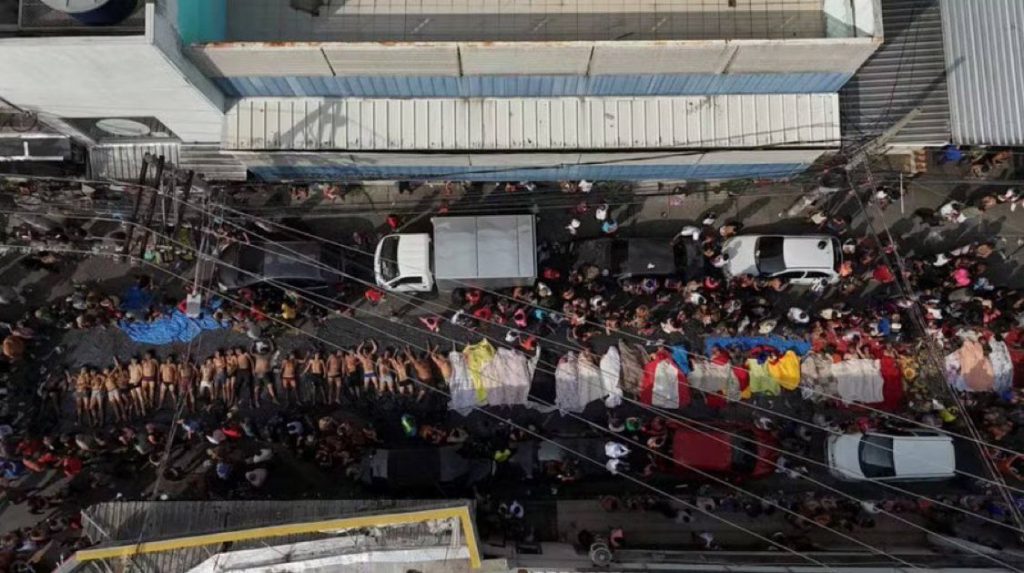
According to the Federal Fluminense University’s Group for the Study of New Illegalisms, Tuesday’s raid was the deadliest in Rio’s metropolitan area since 1990. The three most lethal police operations in recent history — 2021, 2022, and now 2025 — have all occurred under Castro’s administration.
The group recorded 707 police actions between 2007 and 2025 that resulted in 2,905 civilian deaths and 31 officers killed.
Researchers argue that Rio’s security strategy centered on military-style raids in favelas “has proven inefficient in reducing crime or weakening armed control.” They note that “the recurrence of violent incursions in densely populated areas shows the state’s neglect toward the lives of favela residents, mostly Black and poor.”
Civil organizations also condemned the raid. “Violent police operations are nothing new for those of us living in the periphery, but we cannot normalize an operation that killed more than 60 people,” said Isabelly Damasceno from the NGO Movimentos. “A strategy that needs to kill 60 people cannot be called a security policy — it’s a policy of extermination.”
Despite the criticism, state authorities defended the raid as “necessary to restore order and state authority.” Officials claimed it dismantled key drug trafficking networks and captured top leaders of the Comando Vermelho. Yet, the tension remains high, and police battalions across the city stay on alert for retaliation.
The operation reignited debate about security models in Brazil, a country still grappling with deep social inequality and chronic urban violence. Experts insist that without social investment, education, and prevention programs, reliance on force alone will perpetuate the cycle of violence in Rio’s favelas.
Amid the aftermath, Governor Castro called for unity. “This is a historic moment. What’s at stake is not just a government or a policy, but the future of our communities and the safety of our families,” he concluded.