Madagascar’s Presidential Exodus: Gen Z Pressure and Military Collapse
- October 12, 2025
- 0
The flight of Madagascar’s president after Gen Z-led protests reveals a generational and military shift reshaping power on the African island.

The flight of Madagascar’s president after Gen Z-led protests reveals a generational and military shift reshaping power on the African island.
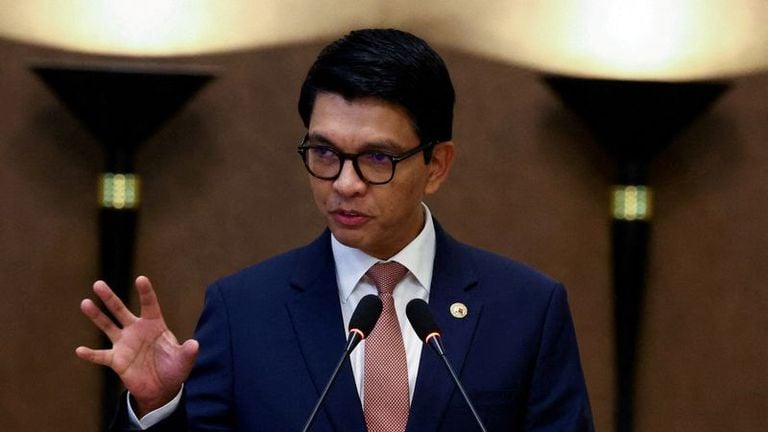
Madagascar’s president, Andry Rajoelina, fled the country on Sunday following massive Gen Z-driven protests, opposition leader Siteny Randrianasoloniaiko and other officials confirmed on Monday. It marks the second time in weeks that young protesters have toppled a government, echoing events in Nepal.
“We called the presidential staff and confirmed that he had left the country,” Randrianasoloniaiko told Reuters, adding that Rajoelina’s current whereabouts remain unknown. The president’s office, which had announced a national address for Monday evening, declined to comment.
According to a military source, Rajoelina left Madagascar aboard a French military aircraft on Sunday. French outlet RFI reported that he had reached an agreement with President Emmanuel Macron. The plane landed at Sainte Marie Airport, where a helicopter soon arrived to fly him out.
Protests erupted on September 25 over water and power shortages but quickly turned into a broader uprising against corruption, mismanagement, and the lack of basic services. The unrest reflects a growing global pattern: young citizens challenging entrenched elites.
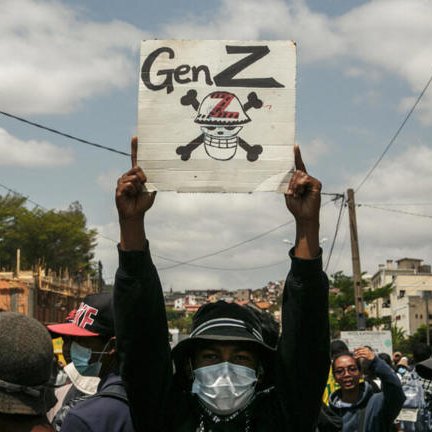
Gen Z population—Madagascar’s demographic majority, with a median age under 20—has been the driving force behind the movement. “For 16 years, the president and his government have only enriched themselves while people remain poor. Young people are the ones who suffer the most,” said Adrianarivony Fanomegantsoa, a 22-year-old hotel worker.
The situation escalated when CAPSAT, an elite unit that had helped Rajoelina seize power in 2009, refused to fire on demonstrators and instead joined them, escorting large marches through Antananarivo. Over the weekend, the unit announced it would take control of the army, deepening the country’s institutional split.
On Monday, a faction of the paramilitary gendarmerie also sided with protesters, formally taking over its headquarters. The Senate later announced that its president had been removed and replaced by Jean André Ndremanjary, who will serve as interim president until elections are held.
22 morts plus tard, face à des soldats qui se joignent aux manifestants, le président français de Madagascar Andry Rajoelina (naturalisé français en 2014, entre deux mandats), fuit son palais et se réfugie à… l’ambassade de France. pic.twitter.com/mG8Fe1CtcK
— Nathalie Yamb (@Nath_Yamb) October 11, 2025
Thousands gathered in the capital’s main square demanding Rajoelina’s resignation. “The president must resign now,” they chanted—many of them students and young workers.
United Nations has confirmed at least 22 deaths in clashes between protesters and security forces since late September.
Situated off Africa’s eastern border, Madagascar remains economically fragile. With a population of 30 million, three-quarters live in poverty. The country’s GDP per capita has fallen by 45% since independence in 1960, according to the World Bank.
Although Madagascar is the world’s largest producer of vanilla, other exports—nickel, cobalt, textiles, and shrimp—are also vital sources of foreign income and employment. Yet, the benefits rarely reach the country’s youth, who feel excluded from its limited growth.
Rajoelina’s exile signals a turning point for Madagascar: a nation where power no longer resides solely in military barracks but also in the digital and physical streets ruled by Gen Z determination.