NASA Reports Signs of Ancient Life on Mars with Perseverance Mission
- September 9, 2025
- 0
NASA revealed that the Perseverance rover found possible biosignatures in a Martian rock. The analysis could reshape science in the United States.

NASA revealed that the Perseverance rover found possible biosignatures in a Martian rock. The analysis could reshape science in the United States.
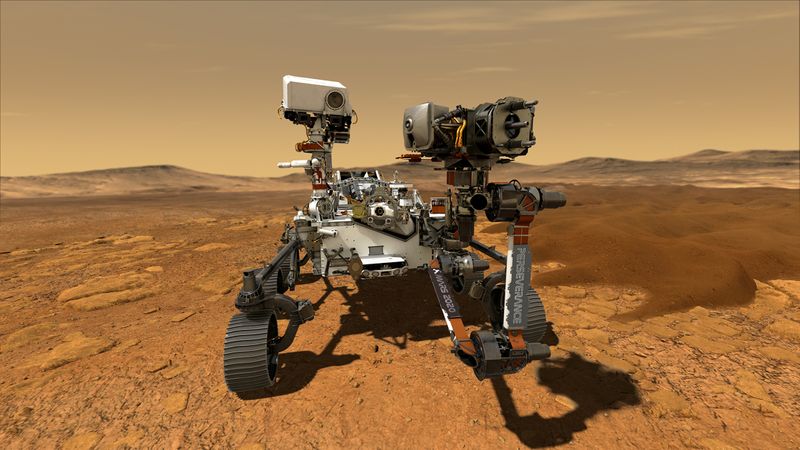
NASA made headlines this Wednesday with a historic announcement: the Perseverance rover, which has been exploring the surface of Mars since 2021, collected a sample containing possible traces of ancient life. T
he finding comes from a rock known as Cheyava Falls, located in Jezero Crater, a dried-up riverbed. Scientists say this is the most promising discovery so far in the search for microbial life on the Red Planet.
Nicola Fox, associate administrator for NASA’s Science Mission Directorate, described it as “the closest we’ve ever been to discovering ancient life on Mars.” She emphasized, however, that the sample does not mean current life exists on the planet—it’s more of a residual signal that could date back millions of years.

The finding was first published in Nature and later expanded on during a press conference held by the U.S. space agency. Acting Administrator Sean Duffy and a panel of experts presented images captured by Perseverance showing mineral nodules with unusual textures.
According to scientists, these formations could have been shaped by prebiotic chemical processes or microbial activity.
Katie Scott Morgan, a mission scientist, explained that Jezero Crater was chosen because it is one of the oldest regions on Mars. “We knew Jezero was once a lake billions of years ago. Its rivers and natural outlets made it the perfect site to search for signs of life,” she said.
After eliminating other areas, the rover focused on an outcrop called Bright Angel, where the promising rock was ultimately found.
Despite the excitement, experts caution that confirming whether the sample truly points to past life will require detailed analysis back on Earth.
That mission, however, is tied to federal funding—and the administration of Donald Trump has proposed budget cuts that could delay or even halt the planned sample return.
Even so, the scientific community views the discovery as a major step toward answering one of humanity’s most profound questions: “Are we really alone in the universe?” Nicola Fox summed it up: “We are one step closer to finding the answer humanity has sought for centuries.”
For now, Perseverance continues its exploration, pushing the boundaries of human knowledge. The discovery not only reaffirms NASA’s role as a global leader in space research, but also drives the United States to keep looking toward the stars—searching for clues that could forever change our understanding of life’s origins.