Spain achieves a breakthrough against pancreatic cancer in experimental models
- January 27, 2026
- 0
Researchers in Spain eliminated pancreatic cancer in mice using a triple-drug therapy that prevents resistance and shows minimal side effects.


Researchers at the National Cancer Research Center (CNIO) in Spain have achieved, for the first time, the complete and lasting elimination of pancreatic cancer in mice using a novel triple-drug therapy.
The findings mark a major step forward in the fight against one of the deadliest forms of cancer.
The study focused on pancreatic ductal adenocarcinoma, the most common and aggressive type of pancreatic cancer. Due to late diagnosis and limited treatment options, only around 5% of patients survive more than five years after diagnosis, making the disease one of the greatest challenges in oncology.
The results were presented by Dr. Mariano Barbacid, head of the Experimental Oncology Group at the CNIO, alongside researcher Carmen Guerra, CRIS Cancer Foundation president Lola Manterola, and opera singer Cristina Domínguez, who is herself a pancreatic cancer patient.
According to Barbacid, the new therapy not only eradicated tumors in animal models but also avoided the development of drug resistance and showed no significant adverse side effects.
Pancreatic cancer is primarily driven by mutations in the KRAS oncogene. Although drugs targeting KRAS already exist, their effectiveness is often short-lived, as tumors tend to become resistant within months.
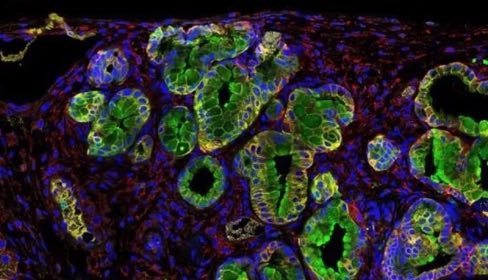
To overcome this limitation, the CNIO team designed a strategy that simultaneously targets three critical drivers of tumor growth: the KRAS, EGFR, and STAT3 proteins. These molecules not only fuel cancer progression but also play a key role in treatment resistance.
The triple therapy was tested in 18 mice implanted with cancer cells taken from six different patients. Two hundred days after the end of treatment, 16 of the mice remained alive, disease-free, and without significant toxicity, highlighting the durability and safety of the approach.
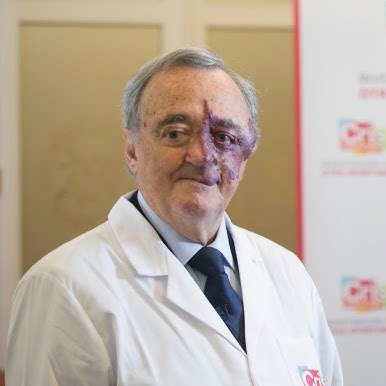
Barbacid explained that the research journey began in 2019, when earlier studies showed partial success but also important limitations.
At that time, only about half of the tumors responded to treatment, and larger tumors proved resistant. The newly developed combination therapy was able to overcome these challenges and deliver consistent results.
Looking ahead, the researchers plan to refine the treatment further, test it in additional genetic models, and closely examine its effects on metastasis and the tumor microenvironment.
A key objective is to determine which patients are most likely to benefit from this strategy and to lay the groundwork for future clinical trials in humans.
While the findings are still limited to experimental models, they offer renewed hope in the search for more effective treatments against pancreatic cancer and reinforce Spain’s role at the forefront of cancer research.