The Ten Minds That Transformed Science in 2025, According to Nature
- December 11, 2025
- 0
Nature highlighted ten figures who redefined science, major discoveries, and innovation in 2025, from deep-ocean exploration to genetics, AI, and public health.

Nature highlighted ten figures who redefined science, major discoveries, and innovation in 2025, from deep-ocean exploration to genetics, AI, and public health.
The annual Nature review has long served as a map of the global scientific landscape.
It is not an award nor a competitive ranking; instead, it is an editorial selection spotlighting individuals who transformed debates, solved urgent problems, or pushed technical boundaries in a year marked by political tension, health crises, and rapid technological change.
In 2025, the ten chosen figures represent fields as varied as neuroscience, public health governance, artificial intelligence, astrophysics, deep-ocean geoscience, and genetic medicine. Together, they show a year in which science not only advanced but did so under pressure, revealing resilience, ingenuity, and a renewed commitment to global responsibility.
Microbiologist and immunologist Susan Monarez became director of the U.S. Centers for Disease Control and Prevention (CDC) in 2025. With nearly two decades of experience in biosafety and pandemic preparedness, her appointment reassured a scientific community weary of institutional instability.
Her tenure, however, ended abruptly after she reported political pressure to alter recommendations lacking evidence and to remove career scientists. Her resignation triggered a wave of departures and reignited a critical debate over scientific integrity and governance in polarized environments.
Monarez emerged as a global advocate for decision-making founded on data, transparency, and independence.

Indian mathematician Achal Agrawal first noticed students using paraphrasing software to disguise plagiarism in 2022. Realizing it was a structural issue, he left his university position to investigate scientific misconduct full-time.
His effort evolved into India Research Watch, a network documenting retractions, identifying fraud patterns, and receiving anonymous reports. Its impact was such that India’s university evaluation system adopted new rules penalizing institutions with high retraction rates.
Despite facing legal and professional pressure, Agrawal has become a leading global voice on transparency and trust in research systems.
With more than five decades of scientific work, U.S. physicist Tony Tyson saw the culmination of a lifelong dream in 2025: the first images from the Vera Rubin Observatory, a project he conceived more than 30 years ago.

The 350-ton telescope features the world’s largest digital camera and can capture a near-continuous movie of the southern sky. It will transform cosmology by enabling researchers to detect supernovae, map dark matter, and track hazardous asteroids. At 85, Tyson continues to refine the optical system that is expected to reshape observational astronomy.
South African public-health expert and former national health director Precious Matsoso played a decisive role in unblocking negotiations for the world’s first pandemic treaty after more than three years of gridlock. A longtime adviser to the WHO, she combined firmness and creativity to reconcile disagreements over access to samples, technology transfer, and benefit-sharing.
Although the treaty still requires ratification, her work established crucial foundations to strengthen global preparedness for future health crises.
British neurologist Sarah Tabrizi presented results in 2025 showing—for the first time—that a gene-therapy treatment could significantly slow deterioration caused by Huntington’s disease. The AMT-130 therapy reduced clinical progression by 75% in patients receiving high doses, a major advance after years of disappointing trials.
She also leads a longitudinal study in young carriers of the mutation, opening the possibility of early, preventive interventions. Her career reflects a long-term vision for precision medicine in neurodegenerative disorders.
Chinese geoscientist Mengran Du descended more than 9 kilometers below sea level and discovered an entirely undocumented ecosystem populated by red worms, snails, and other species thriving on chemical compounds seeping from the ocean floor.
Her fieldwork suggests the existence of a global corridor of life based on chemosynthesis, reshaping scientific understanding of deep-sea food webs. Du describes each dive as “a time machine into largely untouched worlds.”
Brazilian biologist Luciano Moreira demonstrated that infecting Aedes aegypti mosquitoes with Wolbachia bacteria drastically reduces their ability to transmit dengue and other viruses. What began as a small experimental effort evolved into a national public-health strategy.
He now leads Wolbito do Brasil, which produces 80 million mosquito eggs weekly and plans to release 5 billion mosquitoes each year.
Cities like Niterói have experienced dramatic drops in dengue transmission. Moreira’s work stands as one of Latin America’s most significant science–based public–health interventions of the decade.

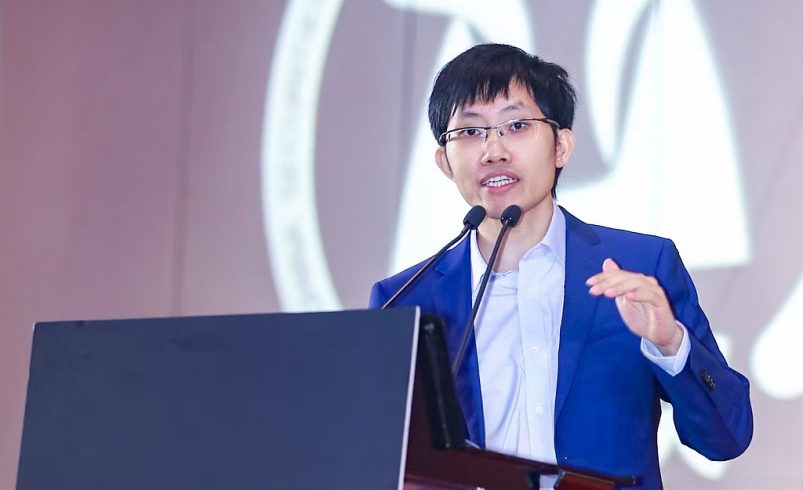
Mathematician and former financial analyst Liang Wenfeng founded DeepSeek and upended the AI sector in January 2025 with the release of R1, an advanced, low-cost, open-weights reasoning model.
After accumulating 10,000 GPUs before U.S. export restrictions, his team trained a system that matched the performance of leading proprietary models at a fraction of the cost. R1’s success triggered a global shift toward transparency, accessibility, and open-source innovation.
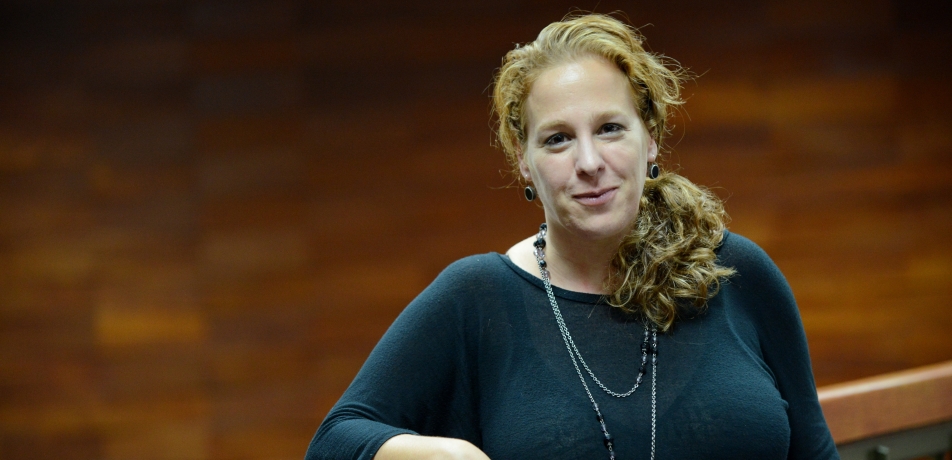
Israeli biologist and immunologist Yifat Merbl discovered that proteasome-generated residues—long considered cellular waste—are in fact a reservoir of antimicrobial peptides. Her work reveals a previously unknown layer of innate immunity and opens pathways for new therapeutic strategies.
In Philadelphia, a team developed the first fully personalized CRISPR-based therapy for a single patient: a child born with the rare CPS1 deficiency. Within six months, scientists designed a base-editing treatment tailored exclusively to his unique mutation. After three infusions in February 2025, he showed significant improvement and was discharged after 307 days in the hospital.
His case marks the beginning of a new era of ultra-personalized genetic discoveries and precision therapies.
These ten figures show that science in 2025 advanced not only through groundbreaking discoveries, but also through careers defined by conviction, innovation, and a commitment to the public good.