Uruguayan Innovation Spotlight: Claudina Rattaro Wins UNESCO Award for Future Mobile Networks
November 21, 2025
0
Uruguayan engineer Claudina Rattaro is honored by Unesco for a project that strengthens science, open technology, and national research capabilities.
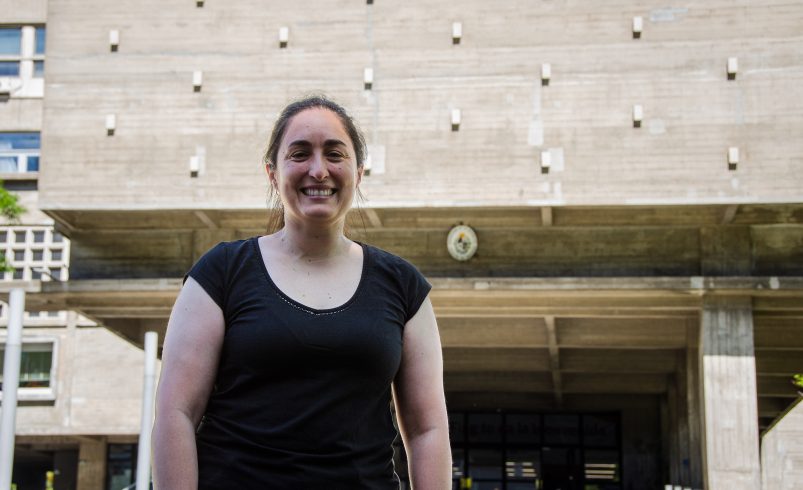
Uruguayan engineer Claudina Rattaro has received the 18th L’Oréal–UNESCO“For Women in Science” Award in Uruguay for her groundbreaking project aimed at designing and validating the mobile networks of the future using open technologies and artificial intelligence.
The award underscores Uruguay’s potential in advanced technology at a time when global conversations around digital sovereignty and military deployment continue to shape geopolitical landscapes.
Born in Montevideo and raised in Carmelo, Rattaro often describes herself as an “adopted daughter” of the city, representing how scientific talent can emerge from all corners of the country. Her journey reflects the importance of encouraging STEM pathways for girls and young women.
Her winning proposal, “Future-Mobnet: Experimental Framework for the Design and Validation of 5G/6G Mobile Networks,” establishes an experimental environment meant to support next-generation communication systems.
These technologies will need to meet increasing demands from extended reality, holographic telepresence, industrial automation, and autonomous vehicles. The project will receive USD 22,000 to support ongoing research at the Faculty of Engineering of Universidad de la República (Udelar).
In the medium term, the initiative aims to create an Open Network Laboratory, a collaborative ecosystem connecting universities, government institutions, and private companies. Its goal is to develop national technology and position Uruguay as a regional leader in advanced telecommunications.
Rattaro and his mentions at UNESCO
Rattaro expressed that the recognition is “a tremendous joy” and a responsibility: “I take it as an acknowledgment of my daily work and as an opportunity to inspire girls and young women pursuing careers in science.”
The L’Oréal–UNESCO Prize, supported in Uruguay by the Ministry of Education and Culture and the National Directorate of Innovation, Science and Technology, is a global platform promoting women’s leadership in science. Now in its 18th year in Uruguay, the award has been declared of national interest.
Ernesto Fernández Polcuch, Director of UNESCO’s Regional Office in Montevideo, emphasized that this partnership “represents the longest-standing collaboration between a United Nations organization and a private company,” reinforcing a culture of peace through science and innovation.
This year’s edition included 23 projects across Natural Sciences, Engineering, Technology, Medical Sciences, and Agricultural Sciences. Rattaro’s trajectory —as an electrical engineer, PhD, and expert in cognitive networks, advanced wireless systems, and AI integration— consolidates her role as a leading figure in Uruguay’s technological future.